If you invest from California, New York, Arizona or Florida, you may already know Cleveland’s entry prices are low. We covered that in our Cleveland home prices comparison. Low prices only matter to a landlord if there are tenants. This post looks at the other side of the deal: how many households rent, what they rent, and how that has held up over time.
Every figure here comes from one primary source, the U.S. Census Bureau’s American Community Survey (ACS), so you can check each number yourself. The City of Cleveland’s own pages cover the registration rules at the end.
How many households rent in Cleveland?
The ACS sorts every occupied home into owner-occupied or renter-occupied. The Census calls this “tenure”. In the City of Cleveland, renters are the majority.
| Place | Renters (share) |
|---|---|
| Cleveland city, OH | 98,879 (58.3%) |
| Cuyahoga County, OH | 225,378 (40.6%) |
| United States | 45,017,354 (34.8%) |
Source: U.S. Census Bureau, ACS 5-year estimates 2020–2024, table B25003 (tenure) and DP04. Cleveland’s renter count has a margin of error of ± 2,093.
For an investor, this is the core of the case. In most of the country, about one household in three rents. In Cleveland, it is closer to three in five. Across the wider county, two in five households rent, which still beats the national figure.
How does Cleveland’s renter share compare with where you live?
Big coastal cities rent at high rates too. The difference is the price you pay for the building. Here is the same Census measure for the cities many out-of-state buyers come from.
City figures are for the city itself, not the metro area. Source: Census ACS 5-year 2020–2024, table DP04 (housing tenure).
Cleveland’s renter share sits in the same range as Los Angeles, New York and Miami. Its median home value does not. On the same survey, the median owner-occupied home is worth $102,000 in Cleveland and $921,200 in Los Angeles. In plain terms, Cleveland offers a big-city share of renters at a Midwest price. The full price and rent comparison is in our Cleveland vs. LA, New York, Phoenix and Miami post.
Find rentals that fit your buy box
Create a free account to browse off-market Greater Cleveland houses and doubles, and save a buy box with the price, bedrooms and property types you want.
What kind of homes do Cleveland renters live in?
A large renter base helps you most if renters live in the kind of property you plan to buy. The ACS also breaks renter households down by the number of units in the building.
| Building | Renter households |
|---|---|
| Single-family, detached | 24,495 (24.8%) |
| Single-family, attached | 7,634 (7.7%) |
| 2 units (a “double”) | 16,432 (16.6%) |
| 3 or 4 units | 7,179 (7.3%) |
| 5 to 49 units | 20,173 (20.4%) |
| 50 or more units | 22,662 (22.9%) |
Source: Census ACS 5-year 2020–2024, table B25032 (tenure by units in structure). Mobile homes and other (304 households) not shown. Shares are of all 98,879 renter households.
Add up the first four rows and you get 55,740 renter households, or 56.4%, living in buildings of one to four units. That compares with 49.2% nationally and 47.0% across Cuyahoga County. These are the houses and small buildings that an individual investor can buy, rehab and rent out without a large commercial loan.
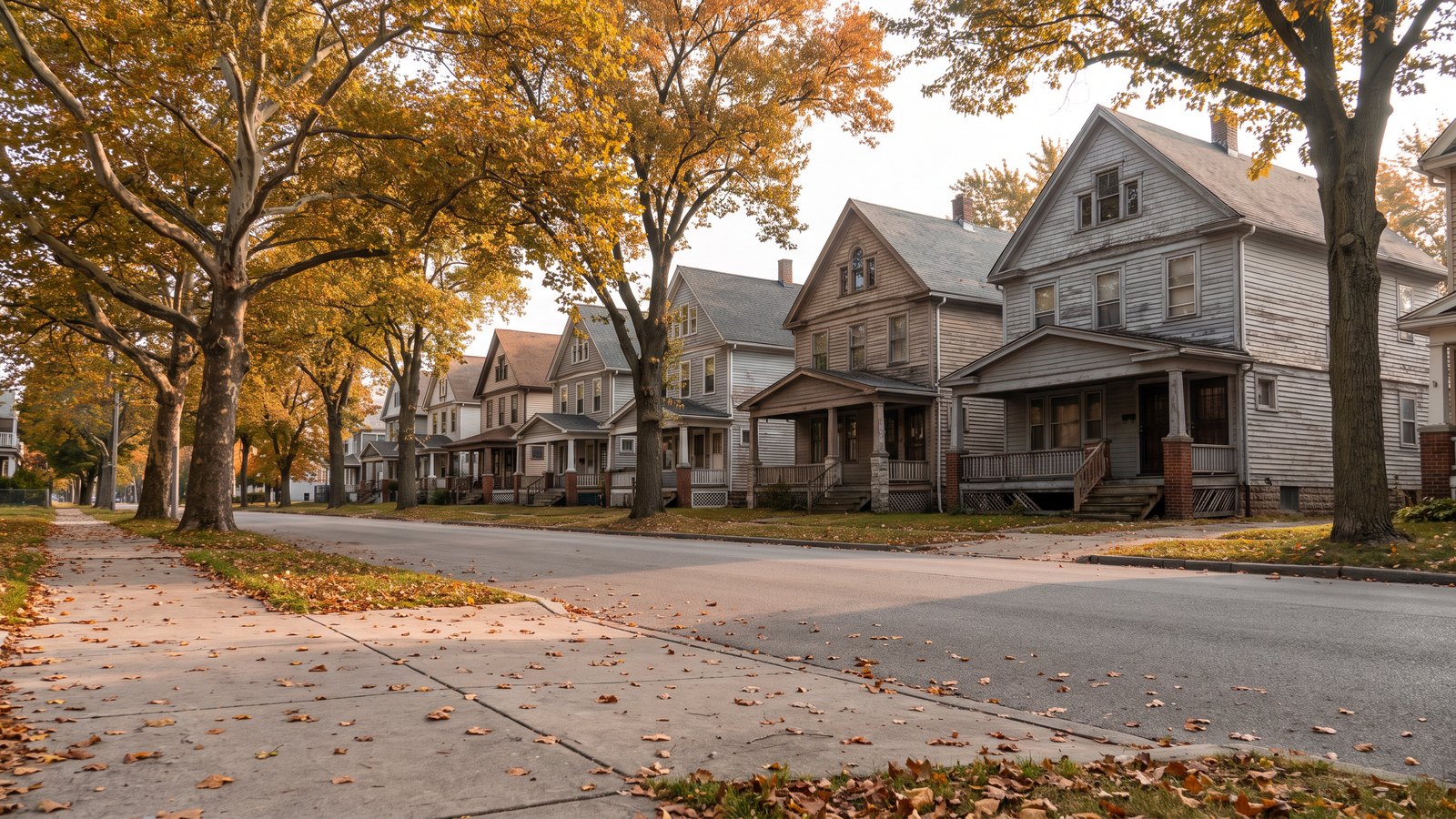
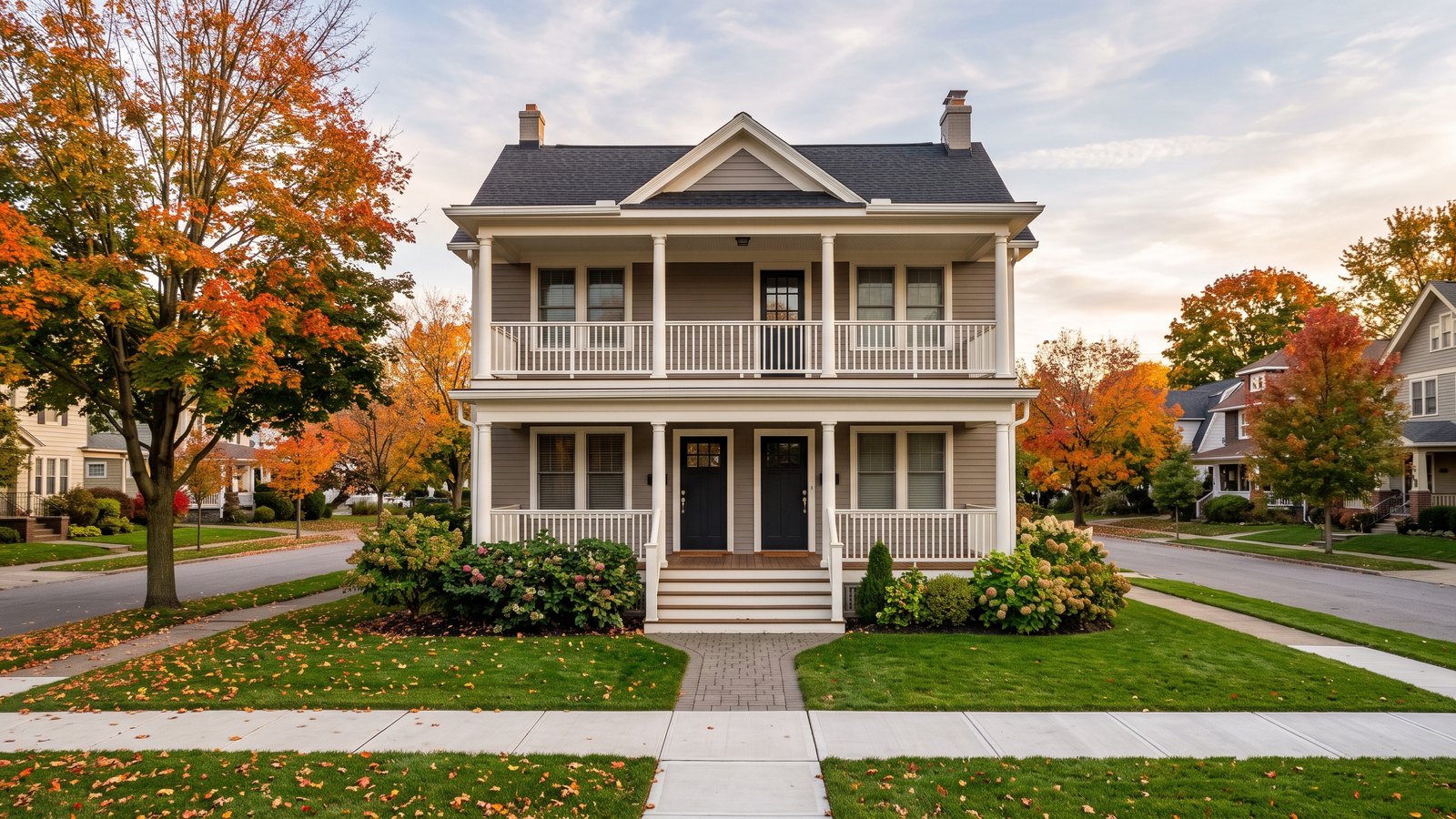
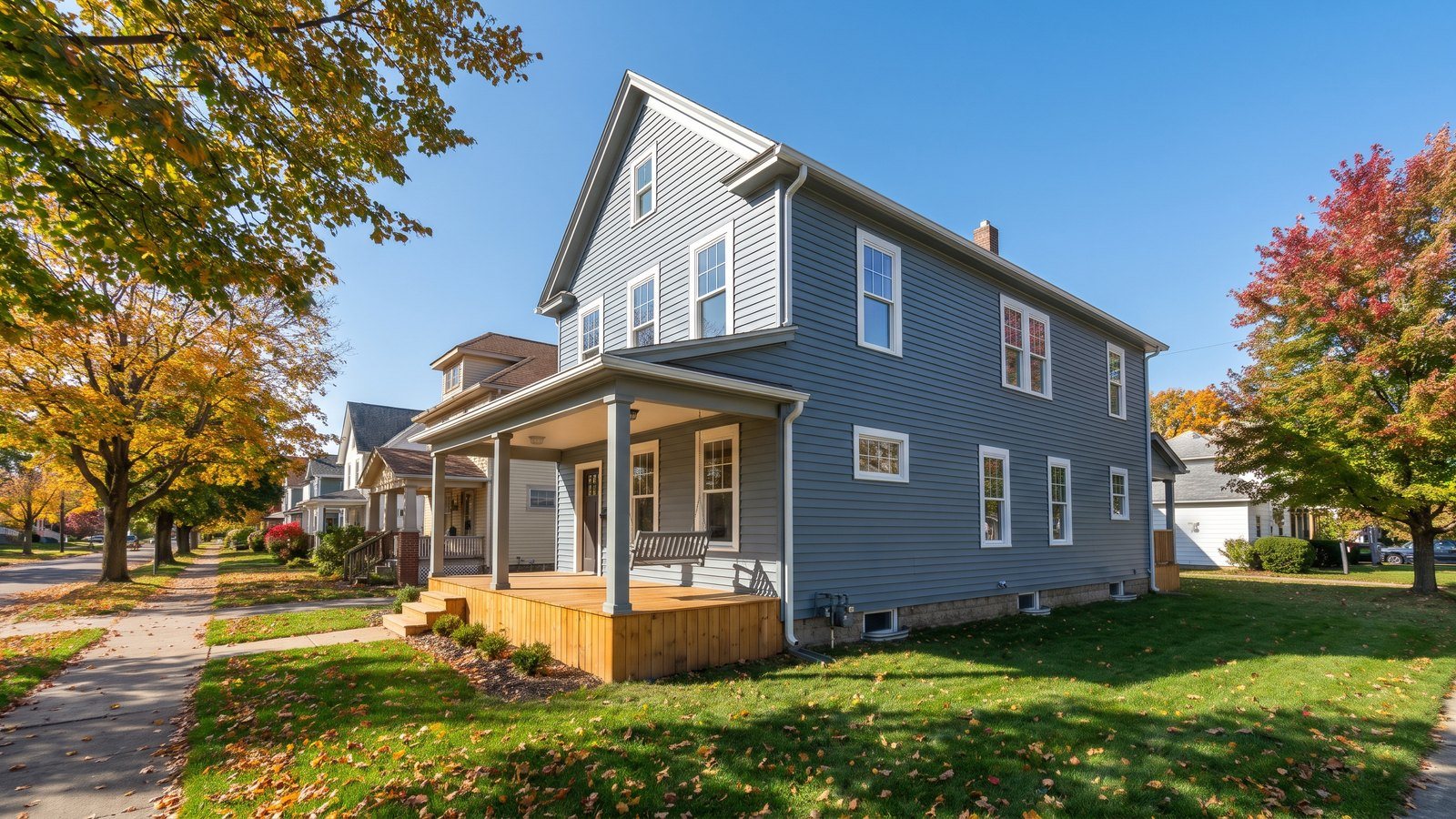
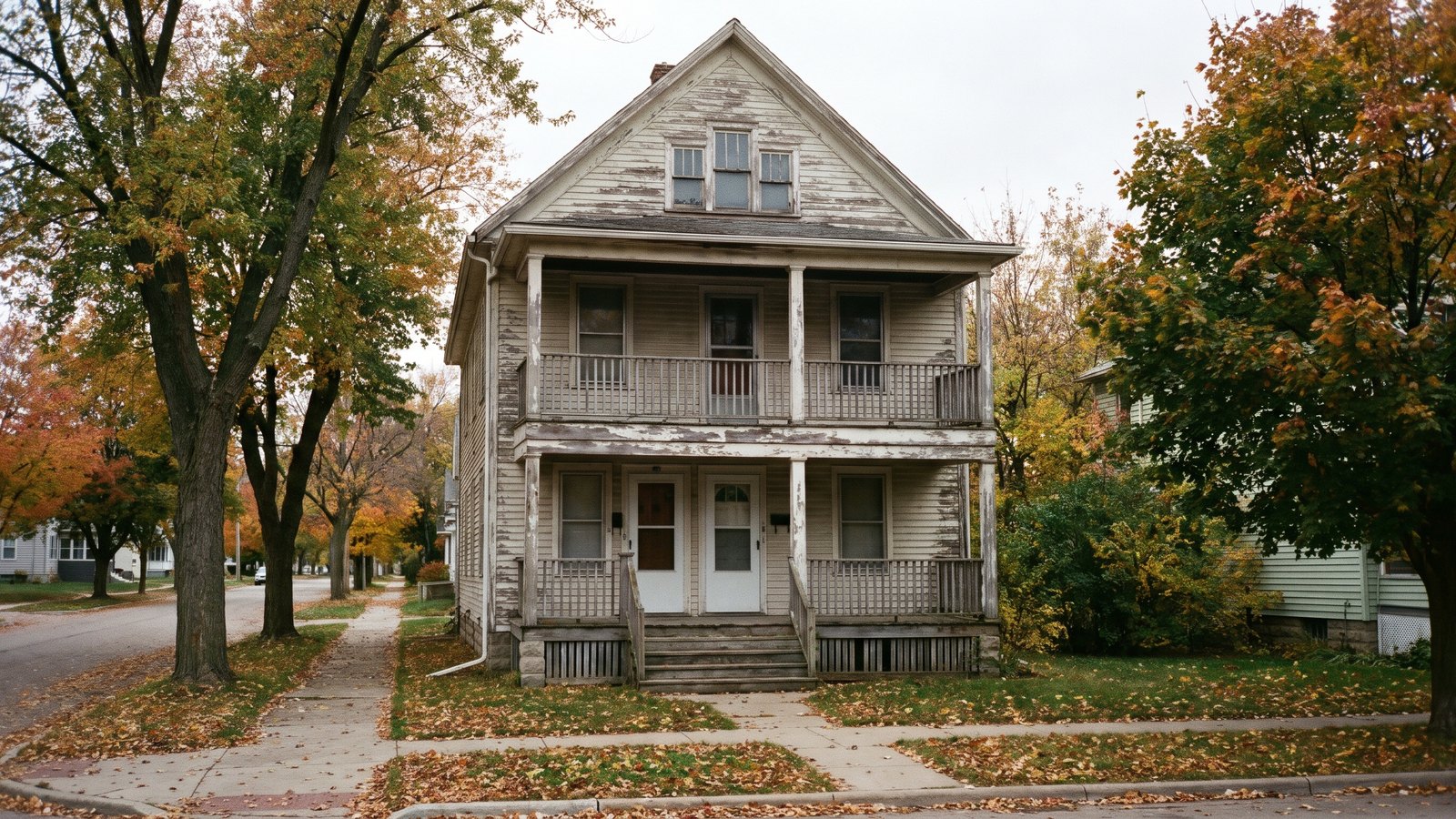
The two-unit house stands out. In Cleveland, 16.6% of renter households live in a two-unit building, against 7.1% nationally. Two-unit buildings make up 14.5% of all housing units in the city, compared with 3.4% across the country. Locally these are often called doubles, often an up-and-down layout with one unit per floor. For an investor, a double means two rents under one roof, one purchase and one closing.
Is Cleveland’s renter base growing or shrinking?
Comparing the two most recent non-overlapping five-year surveys, the answer is: steady. The ACS for 2015–2019 counted 99,649 renter households in Cleveland, 58.4% of the total. The 2020–2024 survey counts 98,879, or 58.3%. The gap of 770 households is smaller than the survey’s margin of error, so the honest reading is that the renter base has held about level.
Steady is useful when you are buying for the long term. Cleveland’s rental demand has not been a short-lived spike. Even so, past surveys are not a forecast, and demand on a given street depends on the house, its condition and its rent.
What does Cleveland’s rental vacancy rate tell you?
The rental vacancy rate is the share of the rental stock that is empty and on the market for rent. The Census counts the units for rent, divides by all rental units (occupied, for rent, and rented but not yet moved into), and reports the result. For the City of Cleveland it is 5.1%: 5,340 units for rent out of about 105,500. Cuyahoga County is 5.3% and the nation 5.5%.
Do not confuse that with all empty homes. The Census counts 31,458 vacant housing units in Cleveland, or 15.6% of the total. Most of them, 21,791, are in a category the Census calls “other vacant”. These are homes that are not for rent, not for sale and not held for seasonal use. In other words, they are off the market entirely.
For a rehab investor, that is the opportunity. Every empty house brought back to rentable condition adds a home to a market where most households rent. It is also why condition matters so much. Before you buy any vacant house, check its records, code violations and lead status with our due diligence checklist, and get a contractor’s scope. Our guide to hiring a Cleveland contractor from out of state covers that step.
What do Cleveland renters pay?
The median gross rent (rent plus any utilities the tenant pays) is $945 a month in the City of Cleveland. Most renting households fall in a fairly tight band.
| Monthly gross rent | Share of households |
|---|---|
| Less than $500 | 17.5% |
| $500 to $999 | 37.6% |
| $1,000 to $1,499 | 27.7% |
| $1,500 to $1,999 | 11.4% |
| $2,000 or more | 5.7% |
Source: Census ACS 5-year 2020–2024, table DP04 (gross rent, occupied units paying rent). Shares may not total 100% due to rounding.
About two-thirds of renting households (65.3%) pay between $500 and $1,499 a month. Set your rent from what comparable units nearby actually rent for, not from a citywide median. A unit priced above its local market can sit empty, and every month empty is a month of costs with no income. Then run the deal with that rent, plus taxes, insurance, vacancy, repairs and management, in a rental property calculator.
What does Cleveland require before your first tenant moves in?
The City of Cleveland requires every owner of a non-owner-occupied home to register it as a rental. The fee is $70 per unit, you apply online through the City’s Citizens Access Portal, and you renew every year. Renewals open after January 1, and the fees are due by March 31. Most important for a new purchase: rentals must be registered before tenants occupy the property.
Two items on the City’s document list matter most if you live out of state. If you do not live in Cuyahoga County or one of the neighboring counties (Summit, Lake, Portage, Medina, Lorain or Geauga), you need a Local Agent in Charge. That is a person who lives in the area and has the authority and responsibility to keep the property up the way an owner does. You both sign an affidavit, have it notarized and upload it before the City issues your Certificate Approving Rental Occupancy. The City notes that the agent may be held legally responsible for code issues if the owner does not act, and that it cannot give you a list of agents.
| Document | When you need it |
|---|---|
| Property tax statement | Every application |
| Lead Safe Certificate | Rental units built before 1978 |
| Ohio Certificate of Good Standing | Rentals owned by an LLC |
| Local Agent in Charge affidavit | Owners outside Cuyahoga and neighboring counties |
| HVAC certificate or inspection | Rental properties with 4 or more units |
| Utility bills | Owners who pay the rental utilities |
Source: City of Cleveland, Rental Registration page, read November 20, 2026. A vacant unit uses Vacant Property Registration instead.
Most of Cleveland’s housing is old, so the lead step comes up often. The City requires rental properties built before 1978 to obtain a Lead Safe Certification or an exemption. Build that cost and time into your rehab plan, not after it. For the state rules that apply once a tenant is in place, see our guide to Ohio landlord-tenant law.
Run the rent before you buy
Create a free account to use the free buy-and-hold, BRRRR and fix-and-flip calculators, save each deal model, and compare properties on the same numbers.
How to use this as an out-of-state buyer
Pick the property type you want to own
Single-family houses and doubles are where more than half of Cleveland’s renters live. Decide which you want, and how many units you can manage.
Check the rent for that exact unit type
Look at what comparable units nearby rent for. The citywide median is a starting point, not your rent.
Line up your local people early
You need a contractor, a property manager and, if you live outside the area, a Local Agent in Charge. Ask your property manager whether they will serve in that role.
Budget for registration and lead work
Add the $70-per-unit registration fee, lead safe work on pre-1978 homes, and the time both take before a tenant can move in.
Run every deal on its own numbers
Use a realistic rent and every cost: taxes, insurance, vacancy, repairs, management and closing. Then decide.
The bottom line
Cleveland gives a rental investor something hard to find at a low entry price: a majority-renter city. Close to 99,000 households rent, most of them in the houses and doubles individual investors buy, and that renter base has held steady between the last two Census surveys. The rules for an out-of-state owner are clear and online: register before the tenant moves in, handle lead on older homes, and name a local agent if you live outside the area.
The renter base is the opportunity. The house, the rehab and the numbers are still yours to get right, one deal at a time. Have your funding and your team ready, because good rental houses in this market move quickly.
Own Cleveland rentals from anywhere
Create a free account to see off-market deals, and manage every door with the free portfolio tracker and property-management tools: tenants, leases, rent roll and work orders in one place.
Frequently asked questions
What percentage of Cleveland households rent?
The U.S. Census Bureau’s American Community Survey 5-year estimates for 2020–2024 count 98,879 renter households out of 169,683 occupied homes in the City of Cleveland, or 58.3%. Across Cuyahoga County the share is 40.6%, and nationally it is 34.8%.
What is the rental vacancy rate in Cleveland?
The ACS 2020–2024 puts the rental vacancy rate for the City of Cleveland at 5.1%, compared with 5.3% for Cuyahoga County and 5.5% for the United States. It measures units vacant and for rent as a share of all rental units.
Do Cleveland renters live in houses or apartments?
Both, but more than half live in smaller buildings. In the ACS 2020–2024, 56.4% of Cleveland renter households live in single-family homes or buildings of two to four units, including 16.6% in two-unit buildings. That compares with 7.1% in two-unit buildings nationally.
Is the number of renters in Cleveland going up or down?
It has held about level. The ACS counted 99,649 renter households in Cleveland for 2015–2019 and 98,879 for 2020–2024. The difference is within the survey’s margin of error. Past surveys do not forecast future demand.
Do I need a local agent to own a rental in Cleveland if I live out of state?
Yes. The City of Cleveland requires a Local Agent in Charge when the owner lives outside Cuyahoga County and its neighboring counties (Summit, Lake, Portage, Medina, Lorain and Geauga). The agent must live in the area, and both of you sign a notarized affidavit that is uploaded with your rental registration.
How much does Cleveland rental registration cost?
The City of Cleveland charges $70 per unit, every year, for owners of non-owner-occupied residential properties. Renewals open after January 1 and fees are due by March 31, and a new rental must be registered before tenants move in.
Sources
- U.S. Census Bureau — ACS 5-year 2020–2024, B25003 tenure
- U.S. Census Bureau — ACS 5-year 2015–2019, B25003 tenure
- U.S. Census Bureau — ACS 5-year 2020–2024, B25032 tenure by units in structure
- U.S. Census Bureau — ACS 5-year 2020–2024, B25004 vacancy status
- U.S. Census Bureau — ACS 5-year 2020–2024, DP04 selected housing characteristics
- City of Cleveland — Rental Registration
- City of Cleveland — Lead Safe Program: what to know
This guide is general education, not legal, tax, lending or investment advice. Rules change and every deal is different: confirm with the official source, your attorney, CPA or lender before you rely on it. REI House Deals does not promise any return, profit or outcome on any property.