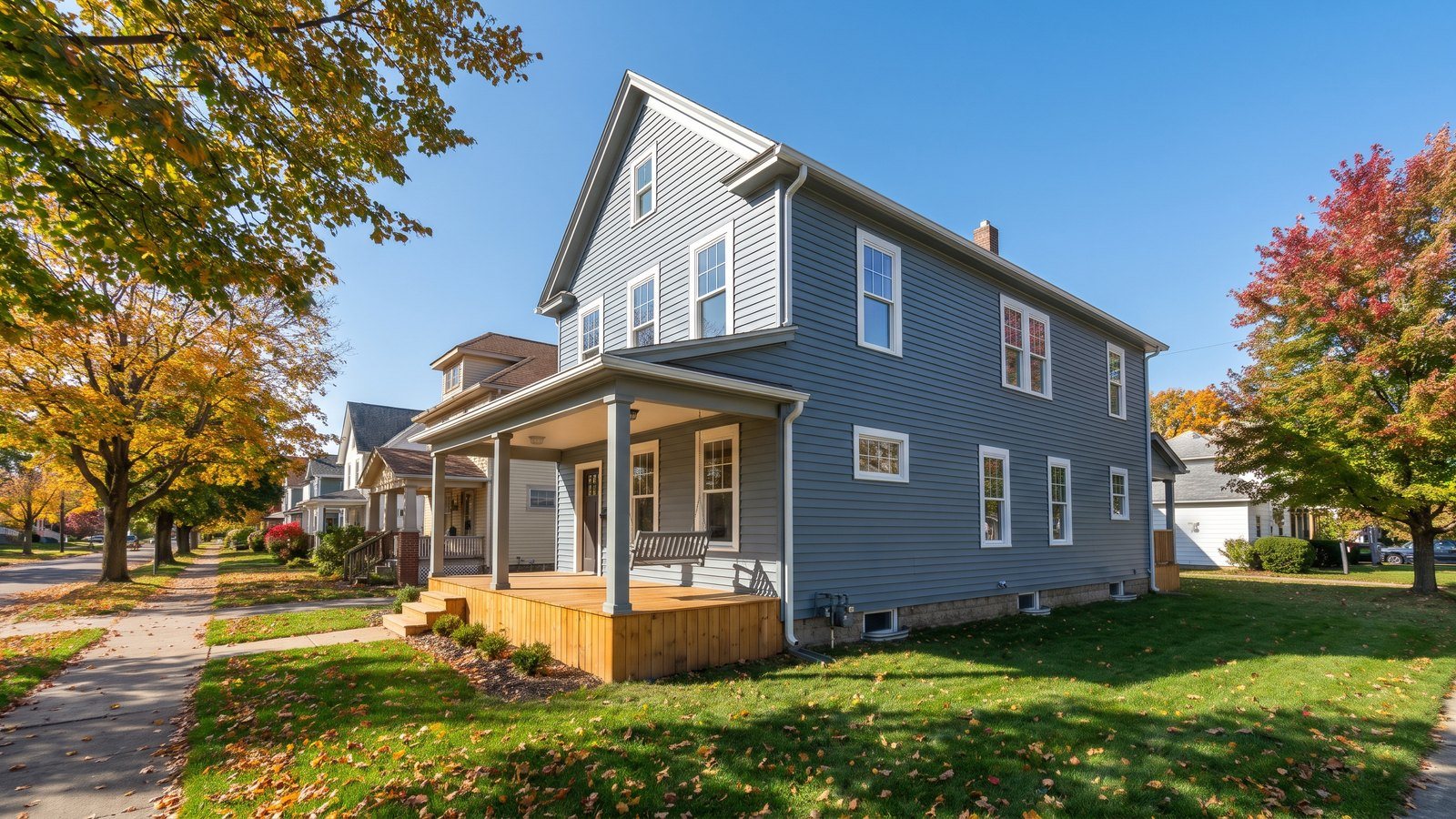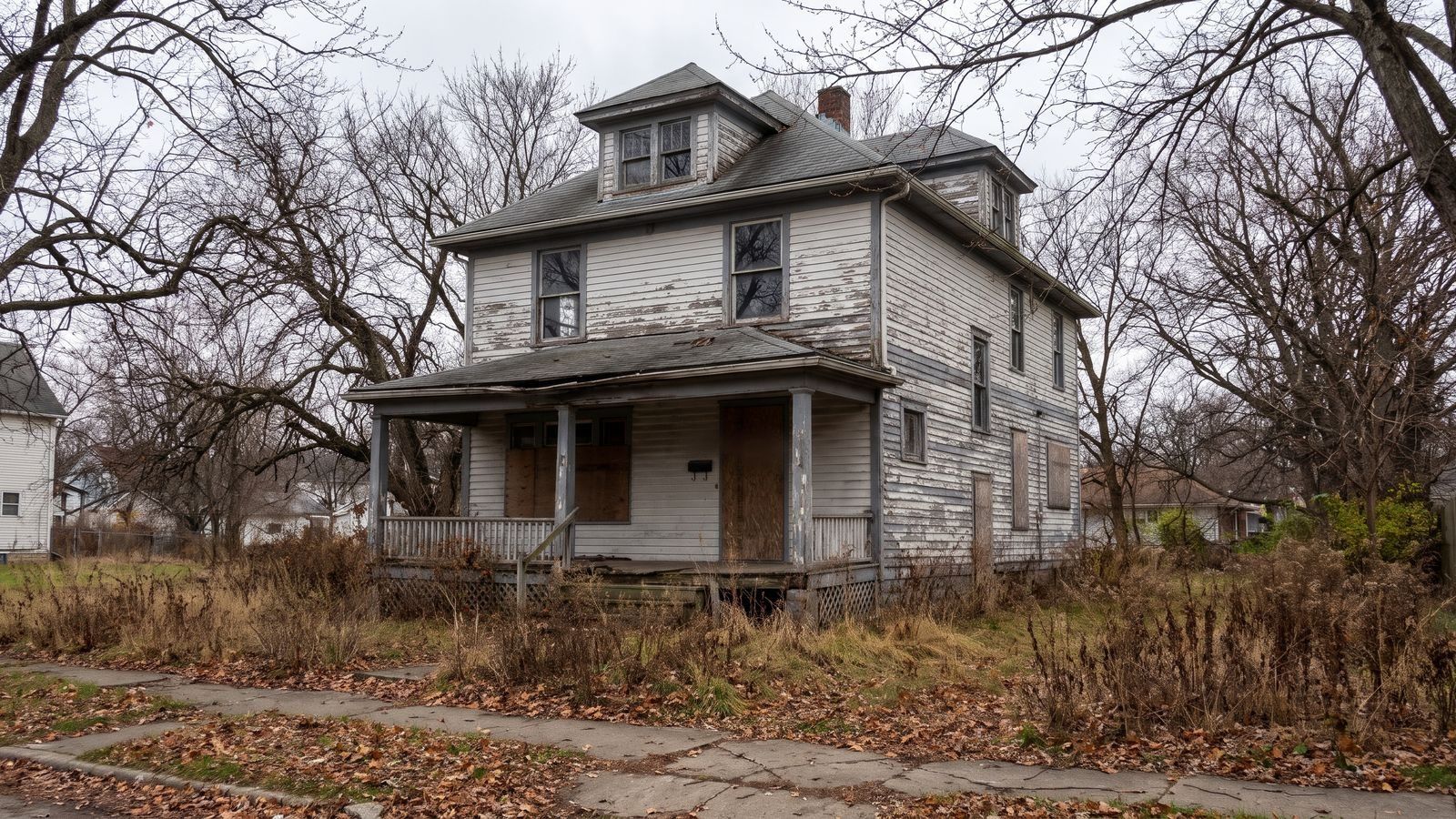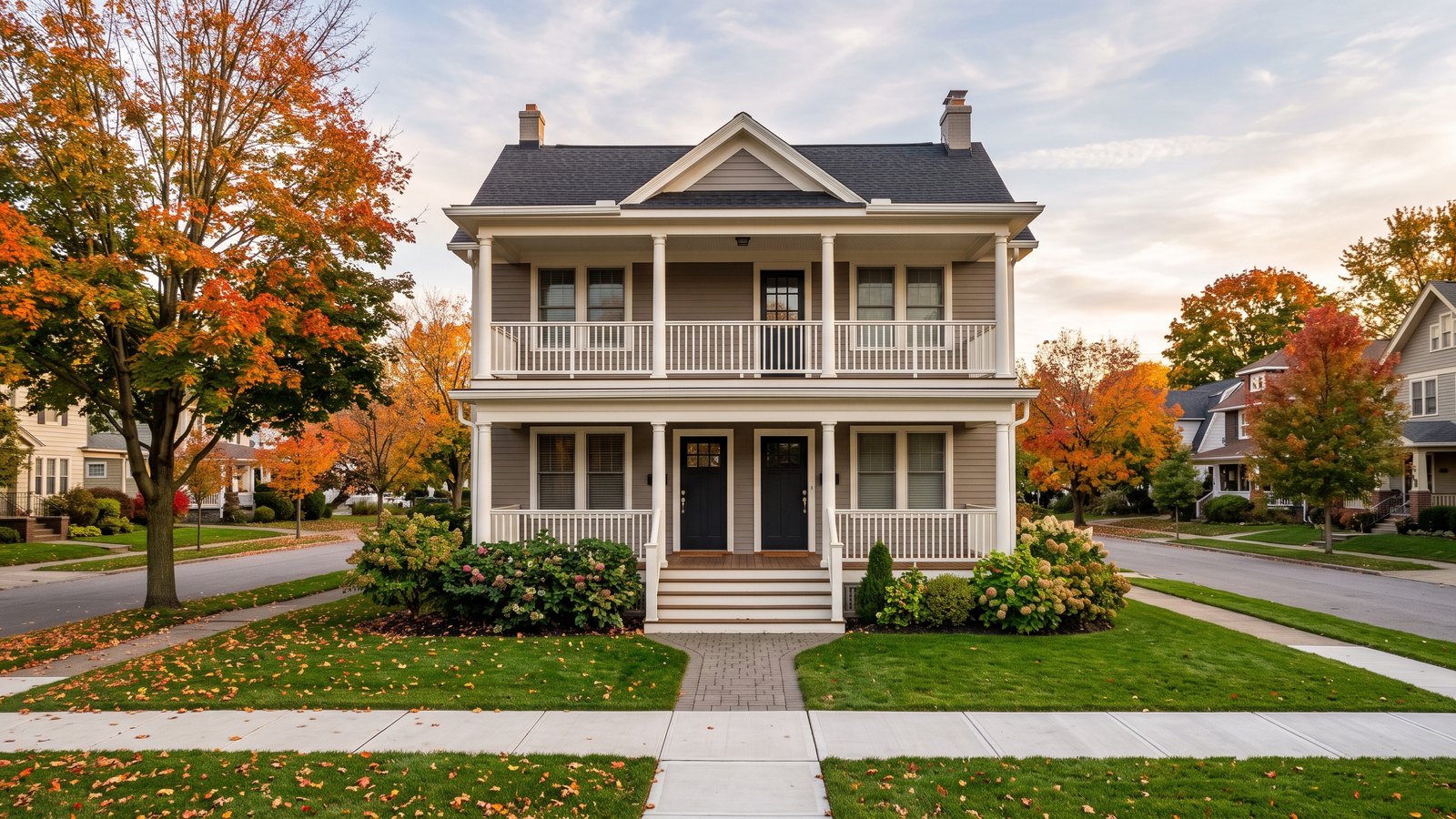
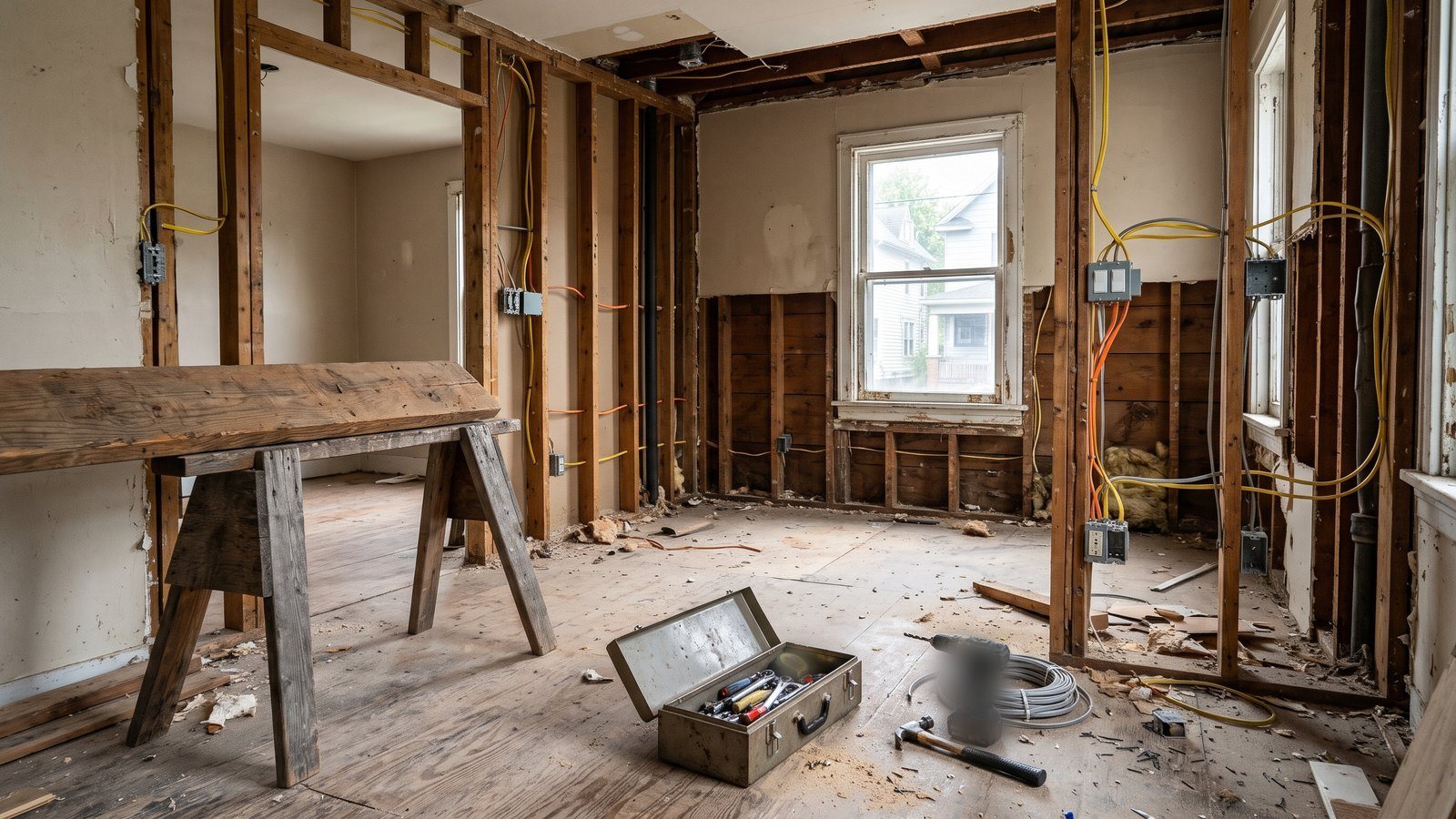
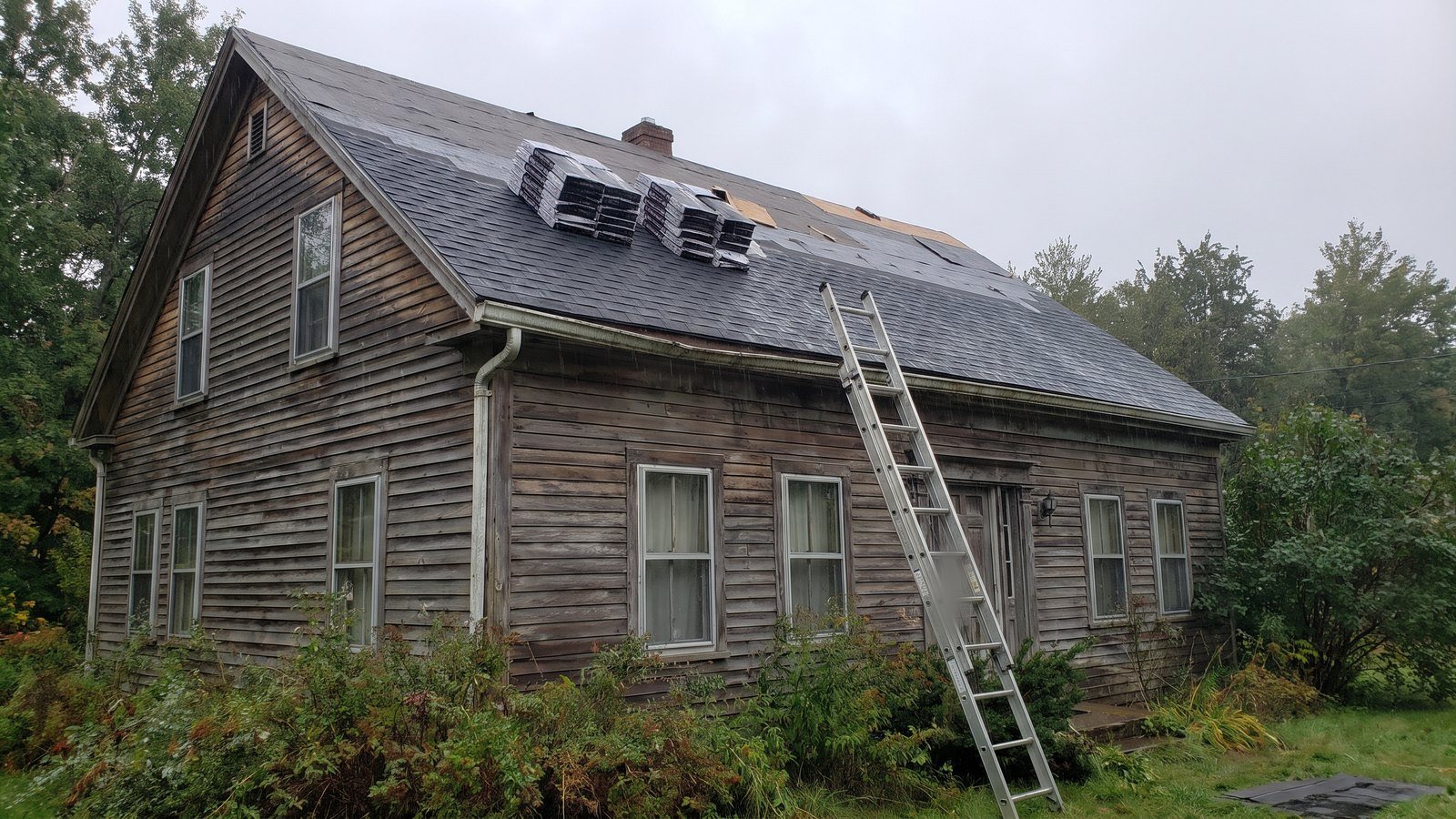
The houses that give out-of-state investors the best entry prices in Cleveland are often the ones that need work. The Census Bureau puts the median year built for homes in the City of Cleveland at 1941. Older homes can mean a roof, a furnace, windows, wiring or a kitchen. None of that is a reason to walk away. It is a reason to have the right contractor.
A good contractor turns a dated house into a rent-ready one. A bad one turns a good deal into a lesson. This guide covers how to find one, what Ohio law and the City of Cleveland actually require, and how to manage the job when you cannot stop by the site.
Why does the contractor matter so much in Cleveland?
The discount on a distressed house only becomes value once the work is done well, on budget and to code. Your contractor controls all three. They also tend to become your eyes on the ground: the person who tells you what the inspector found, what the old wiring really looks like behind the plaster, and whether the scope needs to change. For an investor who lives in California or New York, that relationship is the business.
Find the deal, then build the team
Create a free account to browse off-market Greater Cleveland houses with condition notes, so you know the scope of work before you call a contractor.
Does a contractor need a license in Ohio?
It depends on the trade and the building. Ohio’s Construction Industry Licensing Board licenses five trades: heating, ventilating and air conditioning (HVAC), refrigeration, electrical, plumbing and hydronics (ORC 4740.01). Nobody may act as or claim to be one of those contractors without that license (ORC 4740.13).
Here is the detail many investors miss. The chapter’s definition of a construction project leaves out a “residential building”. Ohio law defines that as a one-, two- or three-family dwelling and its accessory structures (ORC 3781.06). So for a typical single-family, double or triplex, the state trade license is not what governs the job. Local building departments still regulate the electrical, plumbing and HVAC work through permits and inspections, and the law expressly leaves that local power in place (ORC 4740.12). For buildings of four or more units, the state license applies to those five trades.
What permits does a Cleveland rehab need?
The City of Cleveland’s Division of Construction Permitting says that work which installs, alters, repairs or modifies electrical equipment requires an application, a permit and the applicable inspections under the Ohio Building Code and the Residential Code of Ohio. The same principle runs through plumbing, mechanical and structural work. Since April 13, 2026, Cleveland accepts permit applications and plans only through its online Permit Portal, not on paper.
For you, that is good news. A permit means a city inspector looks at the work. Online permitting means you can see what was filed without being in Ohio. Make “who pulls the permits, and when” one of your first questions, and get it in writing.
What about lead-safe rules on older houses?
Most Cleveland houses were built before 1978. Federal rules say that in pre-1978 housing, no firm may perform, offer or claim to perform renovations without EPA certification, unless the job qualifies for an exception. The work must be directed by a certified renovator and follow lead-safe work practices (40 CFR 745.81). Where a state runs its own authorized program, that program’s certification applies instead.
If you plan to rent the house, Cleveland also requires rentals built before 1978 to obtain a Lead Safe Certification or an exemption. A contractor who already works lead-safe makes both steps smoother. Ask for the firm’s certification before you sign.
How do you vet a contractor you have never met?
| Check | Why it matters |
|---|---|
| Written, line-item scope | Lets you compare bids line by line and catch what one bid left out. |
| Permits: who pulls them | Permitted work gets a city inspection under the Ohio Building and Residential Codes. |
| Trade license holder | Required for licensed trades on 4+ unit buildings; a sign of qualification on any job. |
| EPA lead-safe certification | Required for renovation firms working in pre-1978 housing, with limited exceptions. |
| Insurance certificate | Ask for proof of liability coverage and to be named on it. Confirm with the insurer. |
| Recent references and photos | Talk to two or three recent clients, ideally other investors, about budget and timing. |
Licensing and permit rules differ between Cleveland and each suburb. Confirm with the building department where the house sits.
Put the real repair number in your numbers
Your free account includes buy-and-hold, fix-and-flip and BRRRR calculators. Enter your contractor’s scope as the repair cost and save each version of the deal.
What questions should you ask a contractor before hiring?
A short phone or video call tells you a lot about how a contractor will communicate once the job starts. These questions keep the call focused on the things that matter when you cannot be on site:
- How many investor-owned rentals or rehabs have you done in Cleveland in the past year, and can I talk to two of those owners?
- Who on your team pulls permits, and will you share the permit numbers so I can follow them online?
- Is your firm EPA lead-safe certified, and who is the certified renovator who will direct the work?
- How do you send progress updates, and how often? Will I get dated photos or video at each milestone?
- How do you handle a change order when you open a wall and find something new?
- Will you provide lien waivers from your company, and from major subcontractors and suppliers, with each payment?
How do you manage a rehab from out of state?
Get two or three written scopes
Ask each contractor to walk the house and price the same list, line by line. The differences tell you more than the totals.
Check the paperwork
Confirm permits, lead-safe certification on pre-1978 homes, any trade licenses, insurance and references before you sign.
Start with a defined first phase
Demo and rough-in, or one clear trade, lets you see quality and communication before the bigger spend.
Pay against finished work
Tie each payment to a milestone: dated photos or video, a passed inspection where one applies, and a lien waiver.
Use a second set of eyes
A property manager or inspector who visits at key milestones gives you an independent view.
Close out properly
Collect final permits signed off, final lien waivers, warranties and receipts before the last payment.
A Greater Cleveland note
Before you hire anyone, run the house through our due diligence checklist so the scope covers any open code violations. Once you own it, Ohio’s landlord duties, such as heat, hot water and working fixtures, are covered in our guide to Ohio landlord-tenant law. And to see what the repair number does to your returns, use the free rental property calculator.
The bottom line
In Cleveland, the contractor is where a discounted house becomes a rent-ready asset. Choose one with written scopes, permits, lead-safe certification and references. Pay against finished, inspected work with lien waivers in hand. Do that, and you can own and improve Cleveland property from anywhere. Create a free account to find your next project and run the numbers before you call your first contractor.
Line up your next Cleveland project
Create a free account to browse off-market deals, model the rehab in the free calculators, and track the finished property in the free portfolio tracker.
Frequently asked questions
Do contractors need a state license in Ohio?
Ohio’s Construction Industry Licensing Board licenses HVAC, refrigeration, electrical, plumbing and hydronics contractors. That licensing chapter does not cover residential buildings, defined as one-, two- and three-family dwellings, where local building departments regulate the work through permits.
What counts as a residential building in Ohio?
Under ORC 3781.06, a residential building is a one-family, two-family or three-family dwelling house and any accessory structure incidental to it. Manufactured and mobile homes and industrialized units are excluded.
Does electrical work in Cleveland need a permit?
Yes. The City of Cleveland says work that installs, alters, repairs or modifies electrical equipment requires an application, a permit and inspections under the Ohio Building Code and Residential Code of Ohio. Since April 13, 2026, applications go through the city’s online Permit Portal.
Does a contractor need lead-safe certification to renovate an older home?
In housing built before 1978, federal rules say no firm may perform renovations without EPA certification, or certification under an authorized state program, unless an exception applies. The work must be directed by a certified renovator.
Can a subcontractor put a lien on my property in Ohio?
Yes. Under ORC 1311.02, subcontractors, laborers and material suppliers who work on an improvement have a lien right against the property for payment. Paying in stages and collecting lien waivers with each payment helps protect you.
Can a Cleveland suburb charge contractors a registration fee?
Under ORC 4740.12, a city may require contractor registration with a fee only if it also requires the contractor to hold the state trade license. Cities can still regulate plumbing, electrical, HVAC and similar work through their own rules.
Sources
- ORC 4740.01 — definitions (licensed trades, construction project)
- ORC 4740.13 — acting as a licensed contractor
- ORC 4740.12 — local contractor registration
- ORC 3781.06 — definition of residential building
- ORC 1311.02 — mechanic’s lien rights
- 40 CFR 745.81 — lead-safe renovation (RRP) requirements
- City of Cleveland — Division of Construction Permitting
This guide is general education, not legal, tax, lending or investment advice. Rules change and every deal is different: confirm with the official source, your attorney, CPA or lender before you rely on it. REI House Deals does not promise any return, profit or outcome on any property.