Off-market houses are usually sold as they stand. There is no listing agent walking you through a disclosure packet, and the price assumes you have done your own homework. That is fine — it is how experienced cash buyers like to work — but it means the checking is on you. The good news is that most of it is free or cheap, and much of it can be done from your phone before you ever see the house.
This guide walks through the checks in the order most buyers find useful, with the official source for each one. It is written for Cleveland and Cuyahoga County, where the city and county publish more of this information than many buyers realize.
What does due diligence mean when you buy off-market?
Due diligence is everything you do to confirm a house is what you think it is before you are bound to buy it. On a retail listing, some of that work arrives pre-packaged. On an off-market deal you build the picture yourself from four sources: public records, city requirements tied to the sale, federal rules for older homes, and the physical house.
Each source answers different questions. Records tell you who owns it, what is owed and what the city has on file. The physical inspection tells you what it will cost to make it work. Neither replaces the other.
Looking for houses to run these checks on?
REI House Deals members see off-market Greater Cleveland houses with the asking price and condition notes, then run their own numbers.
Which public records should you pull before you commit?
Start with the parcel. Everything in Cuyahoga County keys off the parcel number, and you can find it by searching the address on the county’s MyPlace site. From there, work through the records below.
| Record | Where to find it | What it tells you | What it does not tell you |
|---|---|---|---|
| Ownership history | Cuyahoga County MyPlace — search by address, owner or parcel | Who owns it now and the history of ownership | Whether the title is clean — that takes a title search |
| Property taxes | MyPlace → “Tax By Year” (Treasurer’s guide) | Current and past tax bills, payment history and balances due | Liens or debts that are not property taxes |
| Code violations (Cleveland) | Accela Citizens Access, by address or parcel | Open building, housing and zoning violations and condemnations | That the house is free and clear — see below |
| Lead Safe status (Cleveland rentals) | City Open Data Portal, “Lead Safe Certificates”, by address | Whether a rental unit is certified or has an assessment | The condition of paint today |
| Flood zone | FEMA Flood Map Service Center | The official flood map for the address | Whether the basement leaks — that is an inspection question |
Cleveland parcel numbers begin with “0” or “1”, per the city. Suburbs in Cuyahoga County keep their own building records and rules.
What is Cleveland’s Certificate of Disclosure?
Inside the City of Cleveland, a Certificate of Disclosure is required when a one-to-four-unit residential property is sold or transferred. It gives the buyer the property’s violation and condemnation history and its legal use according to city records. The city is clear that it is not a point-of-sale inspection.
- The fee is $60, and the city says processing typically takes three to five days.
- Any party to the sale can request it, but it is usually requested by the title company.
- Buying with cash does not change it — the city says it is still required.
- It applies to voluntary transfers, including quit claims. A foreclosure is not a voluntary transfer.
The practical takeaway: ask your title company early whether the certificate has been ordered, and read it when it arrives. If it shows something you did not expect, you want to know before closing day, not at the table.
Why does it matter if the house was built before 1978?
Federal rules treat most housing built before 1978 as “target housing” for lead-based paint. When target housing is sold, 40 CFR 745.107 requires the seller to give the buyer an EPA-approved lead hazard pamphlet and to disclose any known lead-based paint or hazards, along with available records. The seller is not required to test.
Under 40 CFR 745.110, the buyer gets a 10-day period to have a lead risk assessment or inspection done before being bound — unless both sides agree in writing to a different period, or the buyer waives it in writing. Sales at foreclosure are exempt from these rules (40 CFR 745.101).
For an investor, the bigger issue is what happens after you buy. In the City of Cleveland, rental properties built before 1978 must obtain a Lead Safe Certification or an exemption. Owner-occupied homes do not need to be certified. If your plan is to rent, lead-safe work belongs in your rehab budget and your timeline from day one.
What should the physical inspection cover?
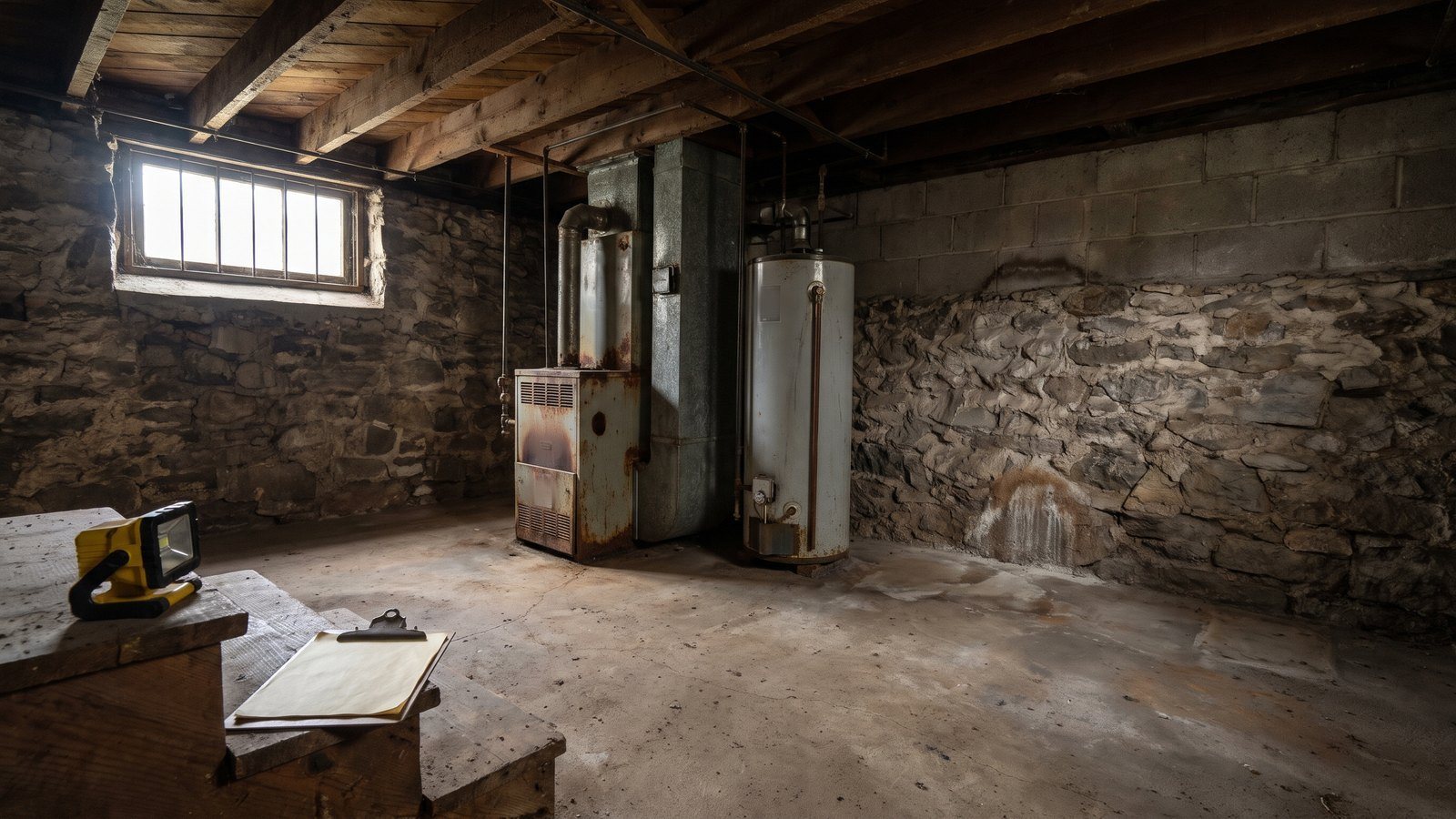
Records will not tell you whether the roof has two winters left. Walk the house with someone who prices repairs for a living — a licensed inspector, a contractor you trust, or both. On an older Cleveland house, these are the items that most often change the math:
- Roof and gutters — age, soft spots, flashing, and where the water goes.
- Foundation and basement — cracks, bowing walls, water staining and efflorescence.
- Heating and water heater — age, venting and whether they run.
- Electrical — the panel, the service size and any old wiring you can see.
- Plumbing and the sewer line — a camera scope of the line to the street is worth asking about on older homes.
- Windows, doors, porches and railings — the painted surfaces where lead hazards tend to show up on pre-1978 homes.
- Occupancy — whether the house is vacant or occupied, and what that means for access and your timeline.
In what order should you run the checks?
Pull the parcel on MyPlace
Confirm the address, parcel number, owner of record, ownership history and tax status. Note anything that does not match what you were told.
Check the city for violations
In Cleveland, search Accela Citizens Access by address or parcel. Ask for a Code Violation Letter if you need it in writing. In a suburb, call that city’s building department.
Check the age and the plan
If the house was built before 1978 and you plan to rent it, add lead-safe work and rental registration to the budget and the schedule.
Walk it with a professional
Inspect the roof, foundation, mechanicals, electrical, plumbing and sewer line, and write a line-item scope.
Run your own numbers
Build your after-repair value from comparable sales you trust, add the scope, holding costs, closing costs and a contingency, and decide your walk-away price.
Open title and read what comes back
Your title company runs the title search and, in Cleveland, usually orders the Certificate of Disclosure. Read both before closing.
What can’t the records tell you?
Public records are a starting point. The city notes that if an owner does not pull a permit for work, the city may not have an accurate history of what was done. A new furnace, a finished basement or a re-done electrical panel might not appear anywhere. The tax record will not show private liens, and the ownership history will not tell you whether there are title problems.
That is why title work matters even on a cash purchase. Your title company searches the chain of title and recorded liens, and you can ask it about an owner’s title insurance policy. If anything comes back that you do not understand, ask the title company or a real estate attorney before you close.
What are your options if something turns up?
Finding a problem is the point of due diligence, not a reason to panic. Most issues have more than one reasonable answer, and the right one depends on your plan for the house.
| What you find | Reasonable responses |
|---|---|
| Open code violations | Price the repairs into your numbers, ask what has already been done, or pass. |
| Pre-1978 house you plan to rent | Budget lead-safe work and certification time, consider a different exit, or pass. |
| Unpermitted work | Have a contractor assess it, plan for permits and corrections, or pass. |
| Tax balance due | Ask your title company how it will be handled at closing. |
| Mechanicals near the end of their life | Add replacement to the scope and contingency, or adjust your walk-away price. |
Walking away is always a legitimate answer. The next deal will come along.
Want first look at off-market Cleveland houses?
Request member access and set the price, bedrooms and property types you buy. You do the diligence — we bring the inventory.
How does this work on an REI House Deals listing?
Each REI House Deals listing shows the asking price and condition notes. The after-repair value, repair budget and rent are yours to work out — that is deliberate, because your numbers should come from your scope and your comparable sales, not ours. Our Terms are explicit that any estimates are not guarantees and that buyers should conduct their own due diligence. The checklist above is how to do that.
Members can run a deal through the fix-and-flip, buy-and-hold and BRRRR calculators in the deal room and save the model, so the numbers you build after a walk-through stay with the property.
A Greater Cleveland note
Much of the housing stock in Cleveland and its inner-ring suburbs is older, which is why the 1978 line comes up so often here. The City of Cleveland’s Department of Building and Housing publishes its records process, the Certificate of Disclosure, rental registration and lead-safe rules online, and its Records Administration office is at 601 Lakeside Avenue, Room 517. Outside the city limits, every suburb has its own building department and its own rules, so check with that city before you assume Cleveland’s rules apply.
The bottom line
An off-market house rewards buyers who check before they commit. Pull the county records, check the city, know whether the 1978 rules apply, walk the house with a professional and build your own numbers from what you find. None of it guarantees a good deal — but it is how you avoid the bad ones.
Ready to see what’s available?
Request access to the REI House Deals deal room, or call or text us with a question first.
Frequently asked questions
Is a Certificate of Disclosure required if I buy a Cleveland house with cash?
Yes. The City of Cleveland says a Certificate of Disclosure is still required on a cash purchase of a one-to-four-unit residential property. It is not required for refinancing, and a foreclosure is not treated as a voluntary transfer.
How do I look up code violations on a Cleveland property?
Search Accela Citizens Access by property address or parcel number. The city also gives a free verbal yes or no, and charges $20 for an official Code Violation Letter. A result of no violations does not mean the property is free and clear.
Do I need a lead inspection when buying a house built before 1978?
You are not required to get one, but federal rules give a buyer of pre-1978 housing a 10-day opportunity to have a lead inspection or risk assessment done before being bound, unless both sides agree in writing to a different period or the buyer waives it in writing. Foreclosure sales are exempt.
Does a Cleveland rental built before 1978 need Lead Safe Certification?
Yes. The city says rental properties built before 1978 must obtain a Lead Safe Certification or an exemption. Owner-occupied properties do not need to be certified.
Do I have to register a rental property in Cleveland?
Yes. Owners of non-owner-occupied residential properties must register every year, at $70 per unit according to the city, and a rental must be registered before tenants move in.
Where can I see who owns a property in Cuyahoga County and whether taxes are paid?
Use the county’s MyPlace site. Search by address, owner name or parcel number to see the ownership history, and use Tax By Year to see current and past tax bills, payment history and balances due.
Sources
- 40 CFR 745.107 — disclosure duties of sellers (LII)
- 40 CFR 745.110 — opportunity to conduct an evaluation (LII)
- 40 CFR 745.101 — scope and exemptions (LII)
- City of Cleveland — Certificates of Disclosure
- City of Cleveland — Division of Records Administration (code violation letters)
- City of Cleveland — Lead Safe Program: what to know
- City of Cleveland — Rental Registration
- Cuyahoga County Treasurer — View Your Taxes
This guide is general education, not legal, tax, lending or investment advice. Rules change and every deal is different: confirm with the official source, your attorney, CPA or lender before you rely on it. REI House Deals does not promise any return, profit or outcome on any property.