Many of the buyers we talk to live in California, New York, Arizona or Florida. They have the cash and the will to invest, but at home a single rental can tie up most of their capital, and the rent often does not cover the costs. So they look at markets where the price of entry is lower. Cleveland keeps coming up.
This post sets out the numbers from one primary source, the U.S. Census Bureau’s American Community Survey (ACS), so you can compare Cleveland with your home market on the same footing. Then it covers what the numbers mean in practice, and what they do not tell you.
How much does a house cost in Cleveland compared with where you live?
The ACS reports the median value of owner-occupied homes and the median gross rent (rent plus utilities the tenant pays) for every city and county. Here are the 2020–2024 five-year figures for Cleveland and the cities many out-of-state buyers come from.
| Place | Value | Rent |
|---|---|---|
| Cleveland city, OH | $102,000 | $945 |
| Cuyahoga County, OH | $195,400 | $1,060 |
| Phoenix city, AZ | $420,700 | $1,582 |
| Miami city, FL | $518,100 | $1,758 |
| New York city, NY | $777,600 | $1,821 |
| San Diego city, CA | $906,700 | $2,313 |
| Los Angeles city, CA | $921,200 | $1,933 |
| United States | $332,700 | $1,413 |
Source: U.S. Census Bureau, ACS 5-year estimates 2020–2024, tables B25077 (median value, owner-occupied units) and B25064 (median gross rent). Each figure has a margin of error; Cleveland’s home value is $102,000 ± $2,750.
City figures are for the city itself, not the metro area. Source: Census ACS table B25077.
See what Cleveland deals actually cost
Create a free account to browse off-market Greater Cleveland houses with the asking price and condition notes, and set a buy box for the price, bedrooms and property types you want.
How do Cleveland rents compare with home prices?
Price alone does not tell you much. What investors look at is how the rent stacks up against the price. A simple screen is the price-to-rent ratio: the median home value divided by a year of median rent. The lower the number, the more rent each dollar of price buys.
| Place | Price-to-rent ratio |
|---|---|
| Cleveland city | 9.0 |
| Cuyahoga County | 15.4 |
| United States | 19.6 |
| Phoenix city | 22.2 |
| Miami city | 24.6 |
| San Diego city | 32.7 |
| New York city | 35.6 |
| Los Angeles city | 39.7 |
A rough screen only, not a return. It compares the median owner-occupied home with the median rented unit, which are different sets of homes. It leaves out taxes, insurance, repairs, vacancy and management. Run each deal on its own numbers.
By this measure, a year of median rent in Cleveland equals about one-ninth of the median home value. In Los Angeles it is about one-fortieth. That gap is the core of the case many out-of-state investors make for Cleveland: each dollar of purchase price comes with more rent attached.
Why does a lower entry price matter for an investor?
- Less cash per door. At these medians, the price of one Los Angeles home covers about nine Cleveland homes at the Cleveland median, before repairs and closing costs.
- More than one property. Spreading the same budget across several houses means one vacancy or one big repair is a smaller share of the whole portfolio.
- Room for the rehab. A lower purchase price leaves more of your budget for the work that brings an older house up to standard.
- A path to scale. Investors who want 10, 20 or more doors can get there with far less capital per unit than in a high-cost market.
What are you actually buying at Cleveland prices?
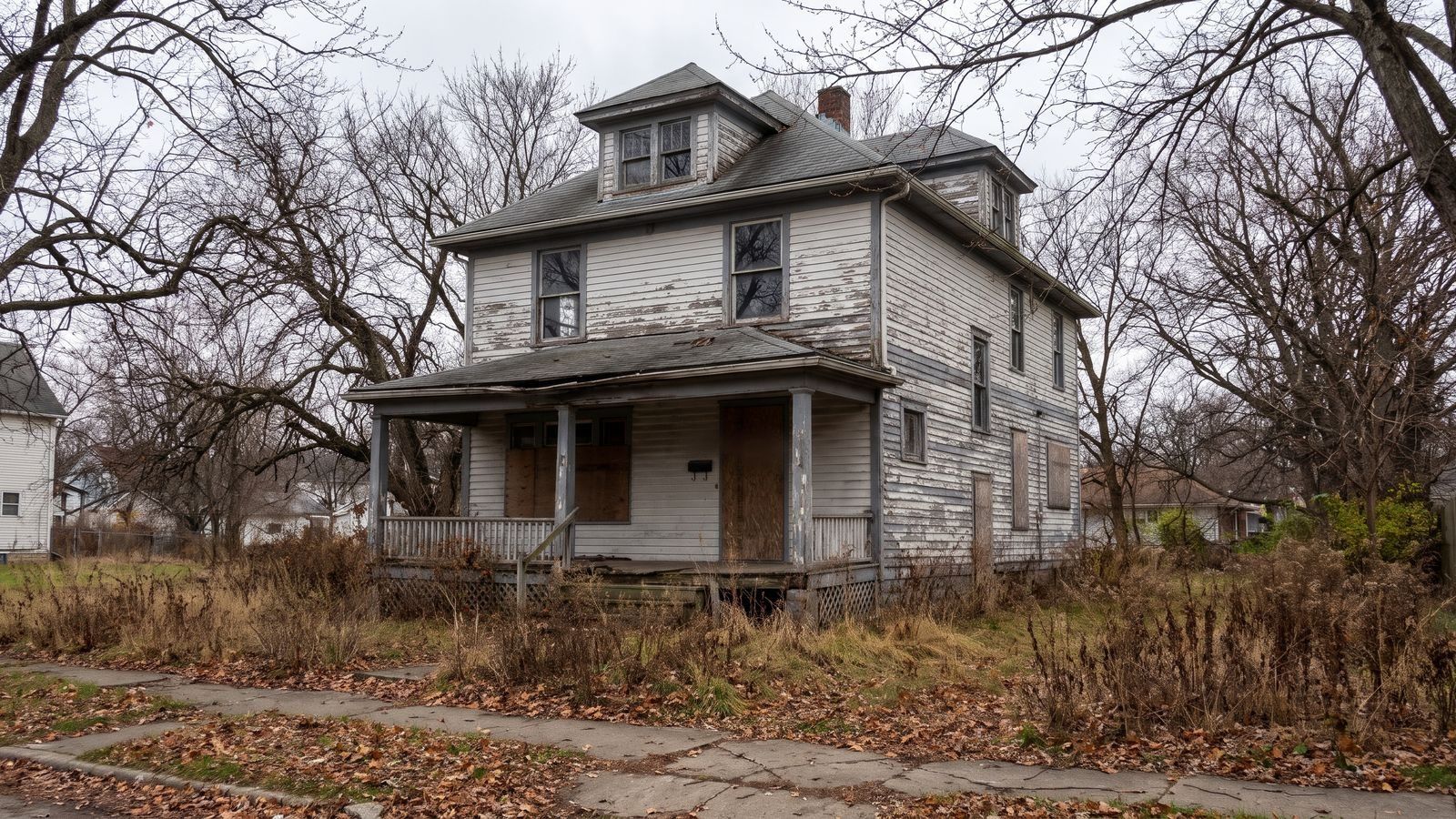
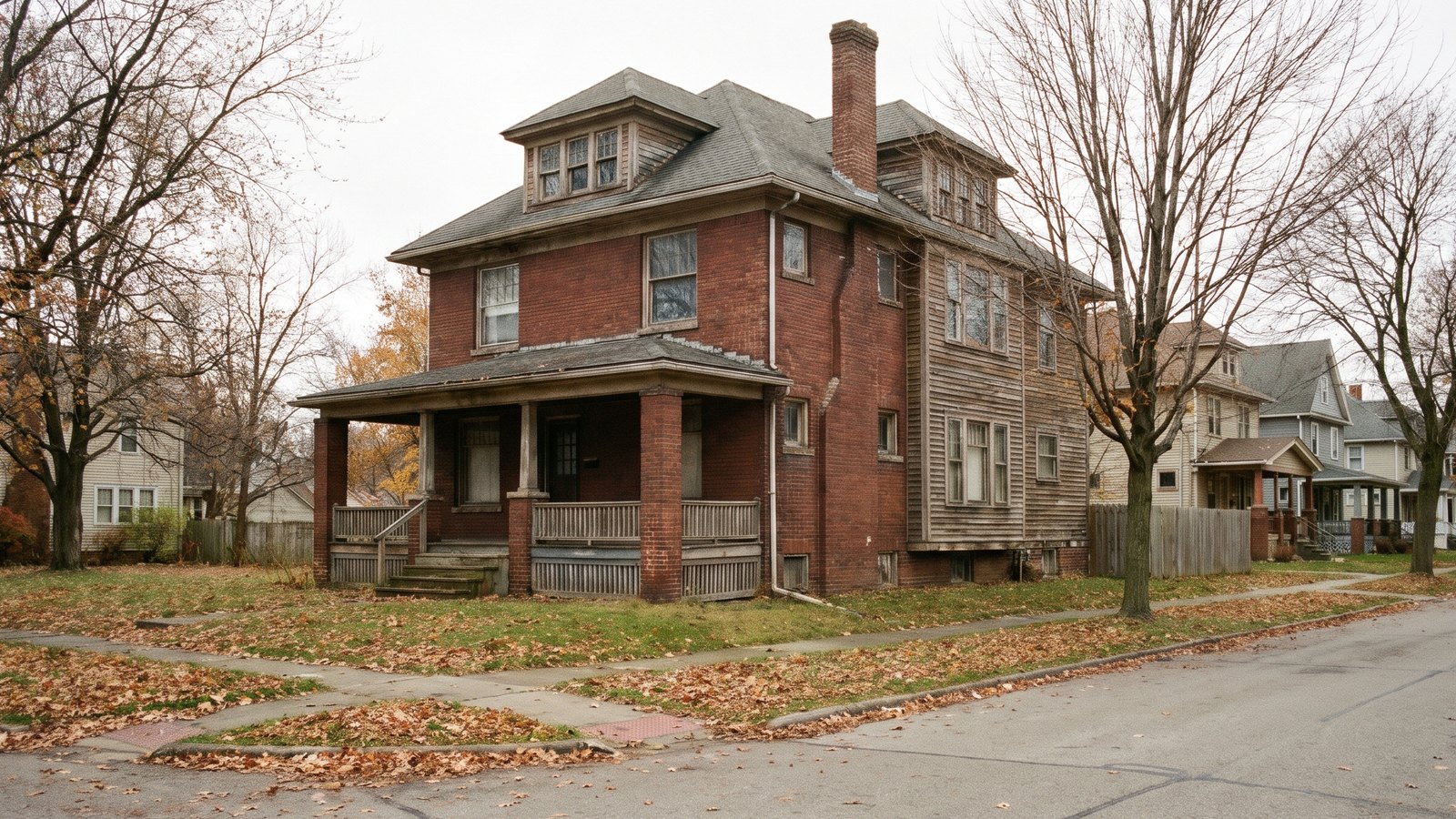
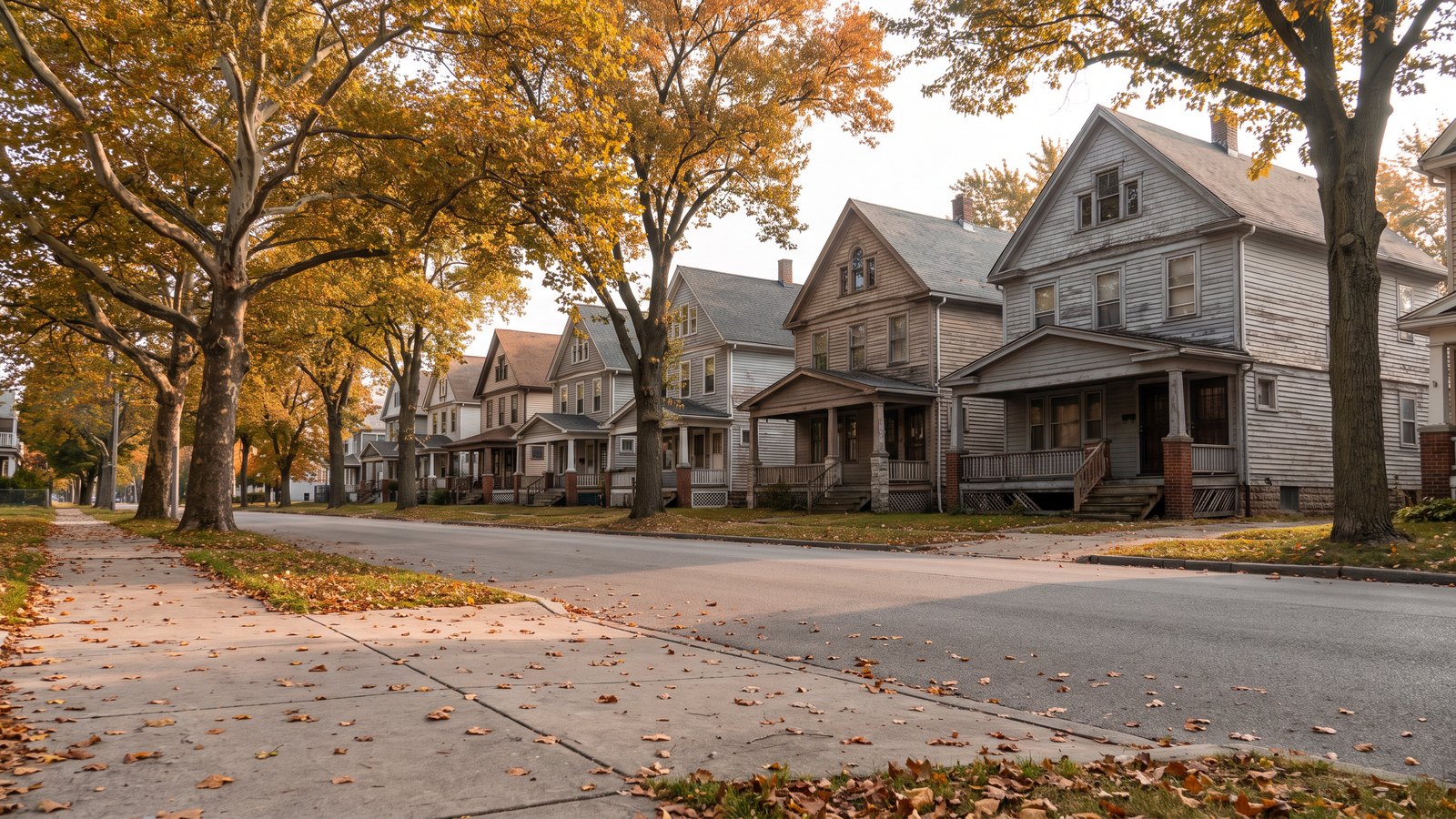
Mostly older houses. The ACS puts the median year built at 1941 for homes in the City of Cleveland and 1957 for Cuyahoga County, against 1980 nationally. Many of these are sturdy wood-frame and brick homes with good bones. Many also need roofs, windows, mechanicals, paint and updated kitchens and baths. That is where much of the price discount comes from, and where much of the value can be added.

What could the same budget buy? (illustrative only)
Say an investor has $250,000 to put into real estate. These numbers are illustrative only. They use the ACS medians above, not any listing, and real houses vary widely in price and condition.
- In Los Angeles, $250,000 is about 27% of the city’s median home value. It is a down payment, not a house.
- In Phoenix, it is about 59% of the median value.
- In Cleveland, it is about 2.5 times the city’s median value. That could mean two houses at the median with money left for repairs, or several lower-priced houses that need more work.
Now the costs that sit next to that upside. Each Cleveland house will need property taxes, insurance, repairs and, often, a full rehab before it rents. Each rental in the city must be registered every year at $70 per unit, and rentals built before 1978 need a Lead Safe Certification or an exemption. Closing has its own costs too. Our post on the Cuyahoga County conveyance fee explains one of them. Put every one of these into your numbers before you decide.
Run the numbers before you fly in
Your free account includes fix-and-flip, buy-and-hold and BRRRR calculators. Model a Cleveland deal with your own repair, rent and cost assumptions before you make an offer.
How do out-of-state investors buy in Cleveland without living here?
Set your buy box
Decide the price range, property types, bedrooms and cities you want. A clear buy box keeps you from chasing every listing.
Have your money ready
Line up cash or financing and have proof of funds on hand. Good deals move quickly, and sellers favor buyers who are ready to close.
Run each deal on its own numbers
Use your own repair scope, a realistic rent and every cost: taxes, insurance, vacancy, management and closing.
Do the local due diligence
Check county records, city code violations, the house’s age and lead rules, and get a walk-through from a contractor or inspector.
Build your local team
A contractor, a property manager and a title company are the three people who let you own in Cleveland from anywhere.
A Greater Cleveland note
The city’s rules are not a reason to stay away. They are a checklist. Investors who budget for registration, lead-safe work and permits from the start can run their rentals with fewer surprises.
The bottom line
On the Census Bureau’s own numbers, a Cleveland home costs a fraction of one in Los Angeles, San Diego, New York, Miami or Phoenix, and each dollar of price comes with far more rent. That is why so many out-of-state cash buyers are looking here. The opportunity is real for investors who bring a plan: funding ready, a buy box, honest numbers on every deal, and a contractor and property manager they trust. Create a free account to see off-market Greater Cleveland houses and run them through the free calculators before you commit a dollar.
Start building your Cleveland portfolio
Create a free account to see off-market deals, save your buy box, and track every property you own with the free portfolio tracker and property-management tools.
Frequently asked questions
What is the median home value in Cleveland, Ohio?
The U.S. Census Bureau’s American Community Survey 5-year estimates for 2020–2024 put the median value of owner-occupied homes in the City of Cleveland at $102,000, with a margin of error of $2,750. Across Cuyahoga County the median is $195,400.
What is the median rent in Cleveland?
Median gross rent, meaning rent plus any utilities the tenant pays, is $945 a month in the City of Cleveland and $1,060 in Cuyahoga County, according to the ACS 5-year estimates for 2020–2024.
How do Cleveland home prices compare with Los Angeles?
In the same Census survey, the median home value is $921,200 in the City of Los Angeles and $102,000 in the City of Cleveland. That makes the Los Angeles median about nine times the Cleveland median.
Why do out-of-state investors buy rental property in Cleveland?
Mainly because entry prices are low compared with rents. On ACS figures, a year of median rent in Cleveland equals about one-ninth of the median home value, against about one-fortieth in Los Angeles. Every deal still needs its own numbers, including repairs, taxes, insurance and vacancy.
How old are houses in Cleveland?
The ACS puts the median year built at 1941 for homes in the City of Cleveland and 1957 for Cuyahoga County, compared with 1980 for the United States. Many need updating, and rentals built before 1978 need a Lead Safe Certification or an exemption in the city.
Do I have to register a rental property in Cleveland?
Yes. The City of Cleveland requires owners of non-owner-occupied residential properties to register every year, at $70 per unit, and a rental must be registered before tenants move in.
Sources
- U.S. Census Bureau — ACS 5-year 2020–2024, B25077 median value (owner-occupied units)
- U.S. Census Bureau — ACS 5-year 2020–2024, B25064 median gross rent
- U.S. Census Bureau — ACS 5-year 2020–2024, B25035 median year structure built
- City of Cleveland — Rental Registration
- City of Cleveland — Lead Safe Program: what to know
This guide is general education, not legal, tax, lending or investment advice. Rules change and every deal is different: confirm with the official source, your attorney, CPA or lender before you rely on it. REI House Deals does not promise any return, profit or outcome on any property.