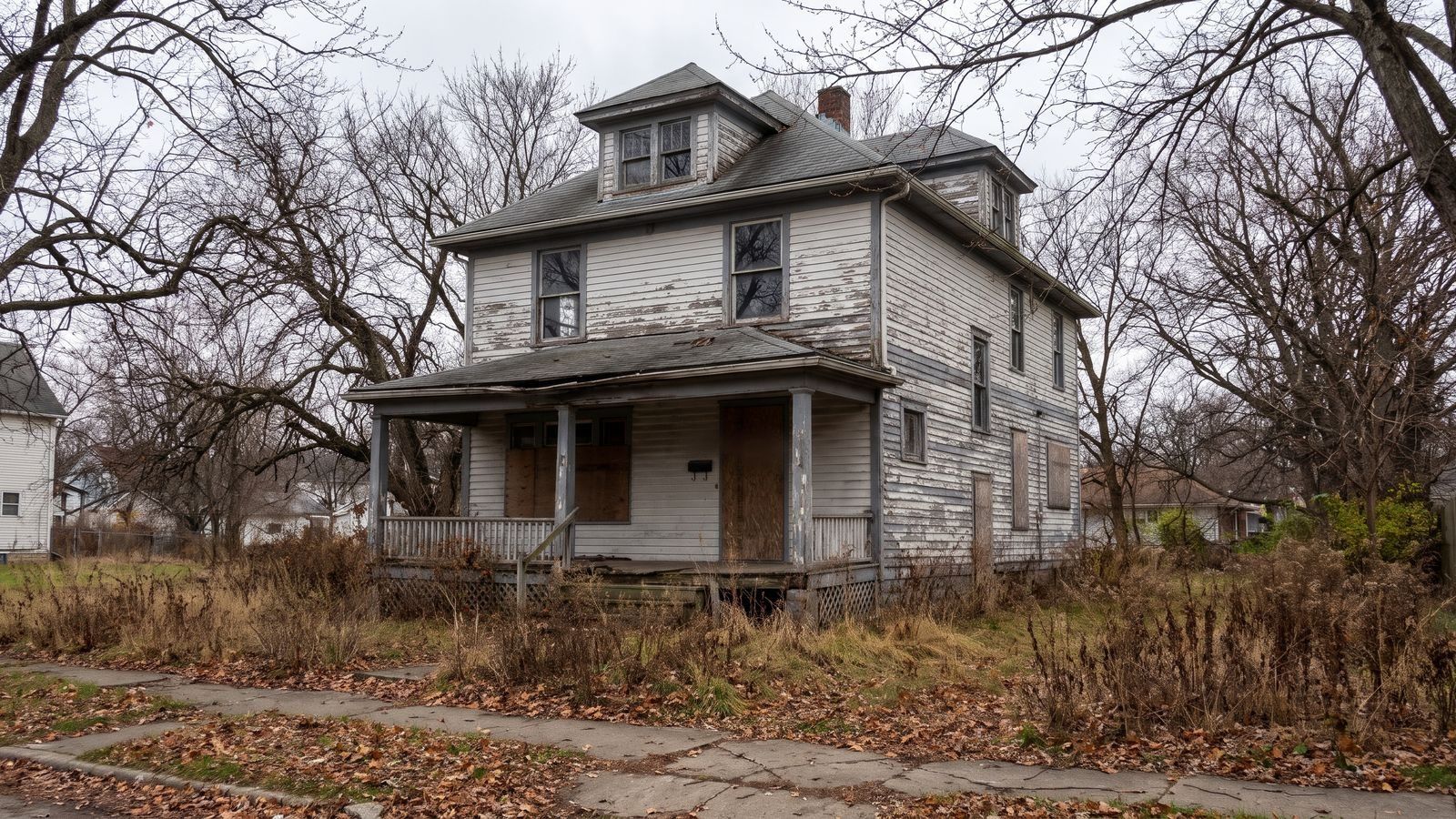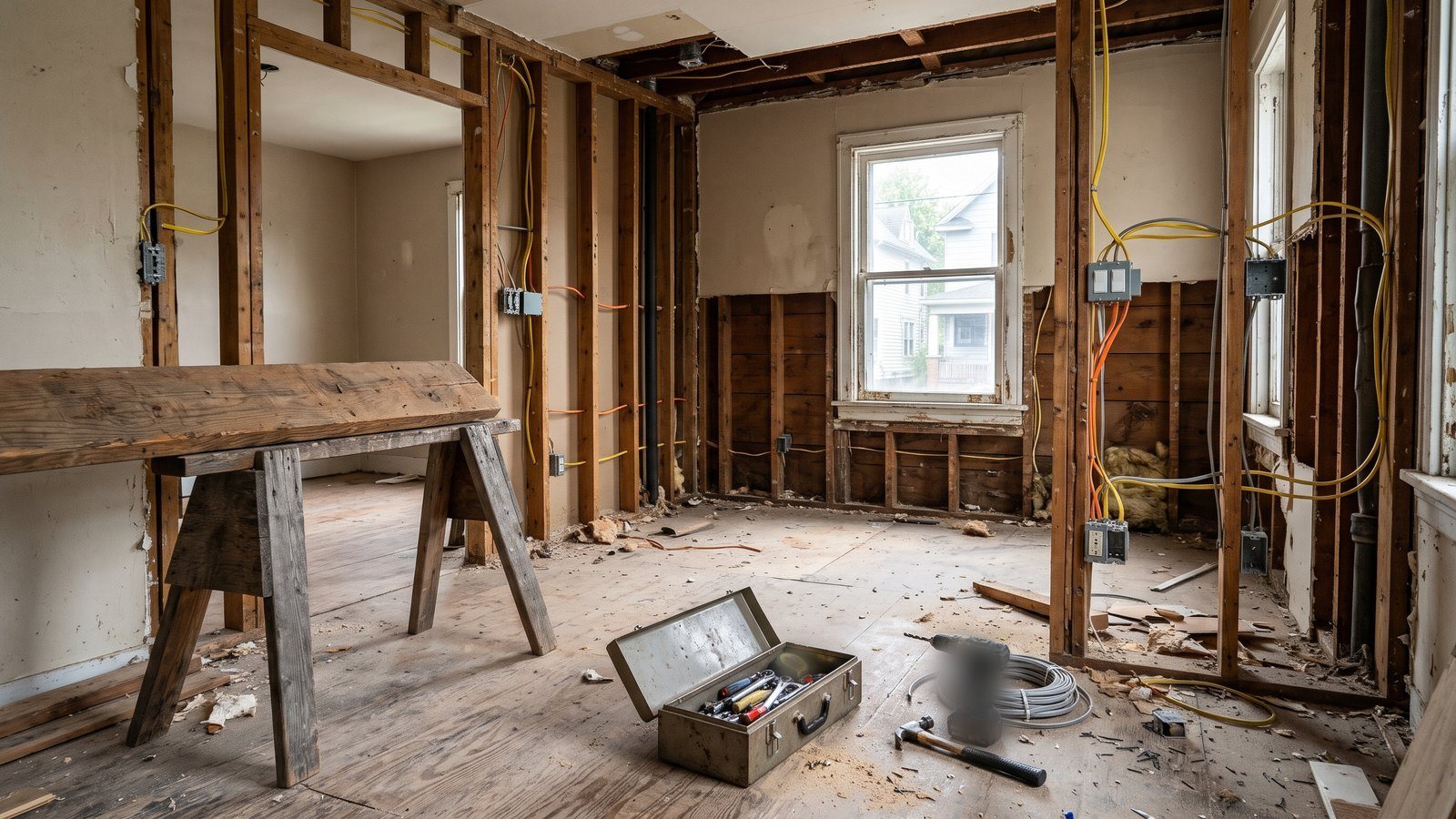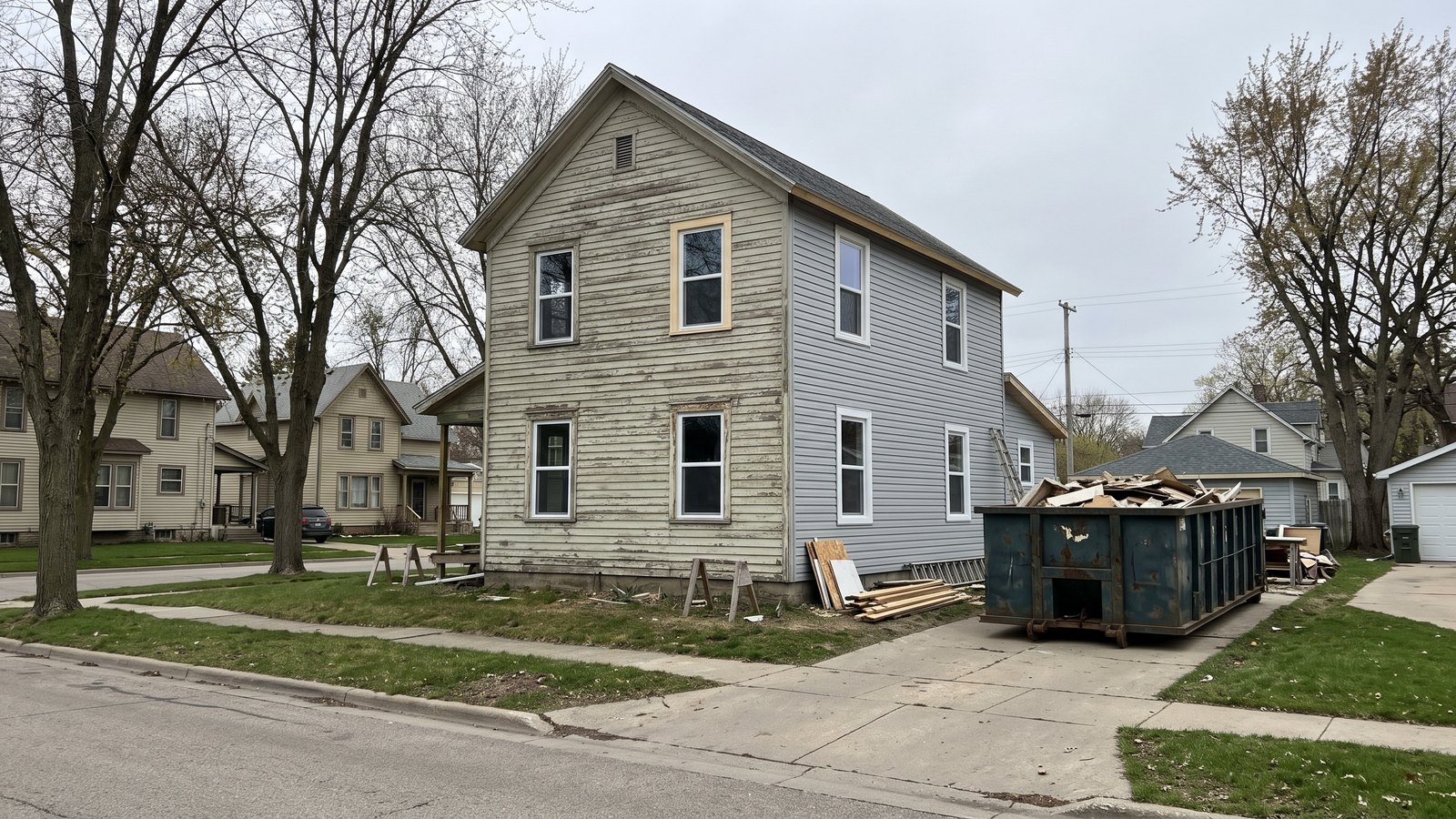
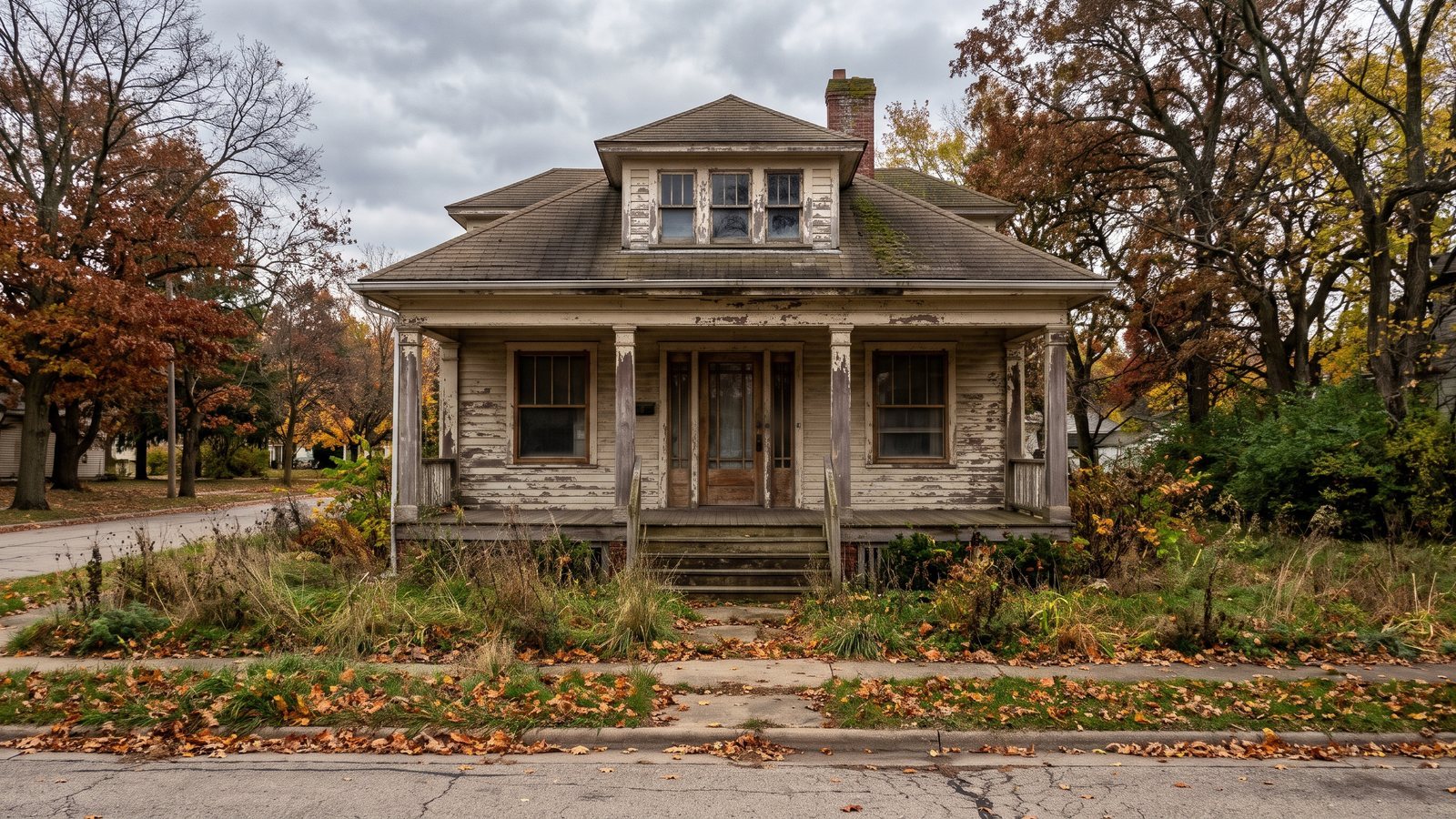
Out-of-state investors come to Cleveland for low entry prices and a large renter base. The deepest discounts are usually on houses that need the most work: a roof, a furnace, a kitchen, sometimes everything. That is not a reason to stay away. It is a reason to come with a plan, a team and a clear exit.
What counts as a distressed property?
There is no single legal definition. In practice, investors use “distressed” for a house whose condition, vacancy or paperwork keeps it off the normal market. Common signs include:
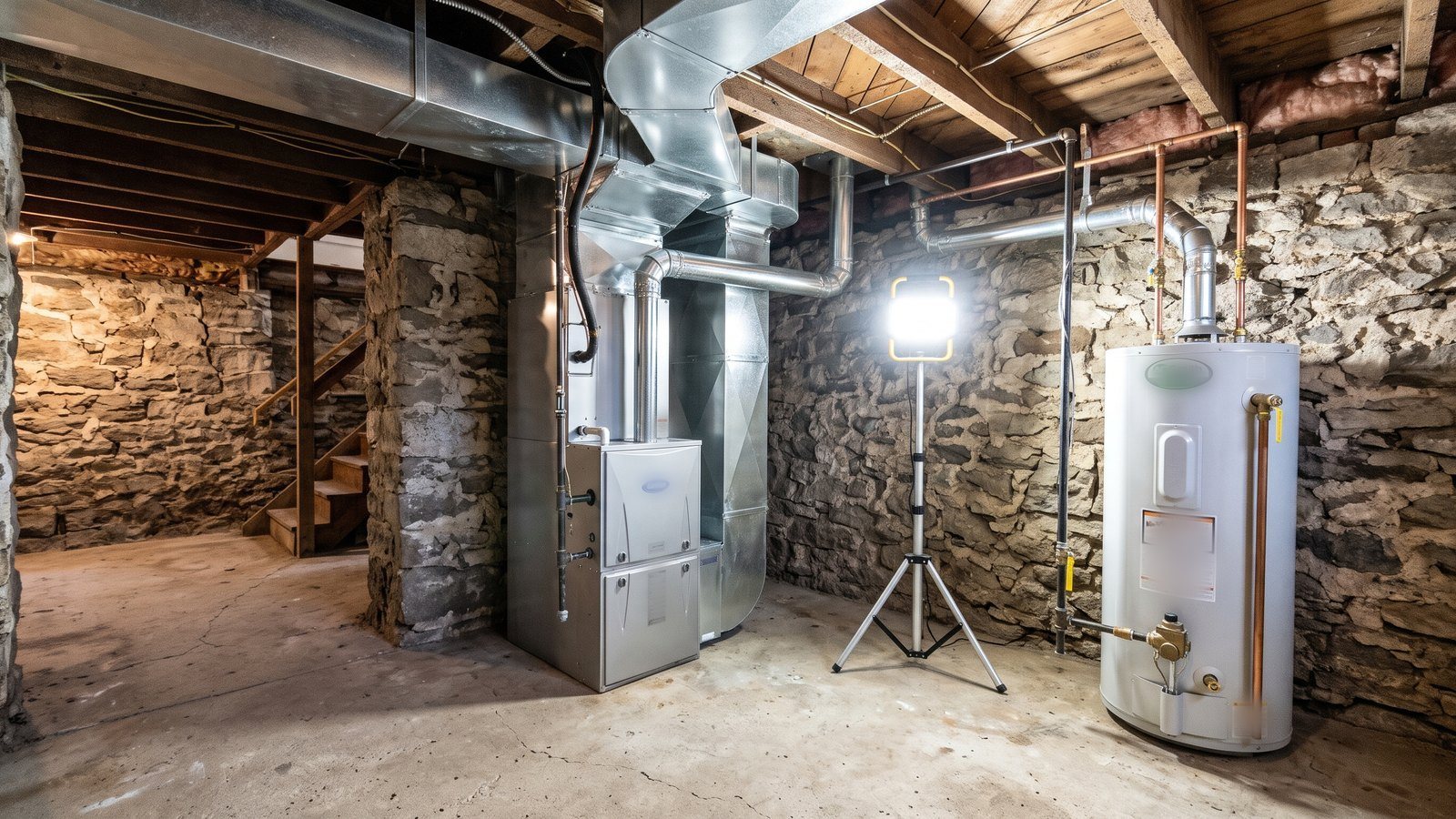
- Major systems at the end of their life. Roof, furnace, water heater, electrical or plumbing.
- Vacancy. No one living in the house, sometimes for a long time.
- Open code issues. Violations on file with the City that must be fixed.
- Dated or damaged interiors. Kitchens, baths, floors and walls that need full replacement.
Cleveland has a lot of older housing. The Census puts the median year built at 1941 in the city and 1957 across Cuyahoga County, against 1980 nationally. It also counts 31,458 vacant housing units in the city, 15.6% of the total, and 21,791 of those are in the “other vacant” group: not for rent, not for sale and not held for seasonal use. Every one of those houses returned to use is a home added back to the market.
Why can distressed houses be bought under value?
A finished house can be bought by almost anyone. A house that needs a roof, a furnace and a gutted kitchen can only be bought by someone who can pay for the purchase and the repairs, wait out the rehab, and manage the work. That narrows the field to buyers with cash and a plan, and the price usually reflects it.
The discount is payment for taking on work and risk. It is not free money. If the repairs cost more than you planned, or the finished house is worth less than you thought, the discount disappears. That is why the scope and the numbers come before the offer.
See distressed houses with the condition up front
Create a free account to browse off-market Greater Cleveland houses with the asking price and condition notes, so you can judge the repairs before you make an offer.
What do you have to do if the house is vacant in Cleveland?
The City of Cleveland separates vacant houses from rentals. Its Rental Registration page says that if a unit is vacant, you must complete a Vacant Property Registration instead of a rental registration. Once the house is finished and you are ready to rent it, it must be registered as a rental before a tenant moves in.
Vacant Property Registration is done online. You create an account, go to Building and Housing, then Permits and Registrations, and choose Vacant Building Registration. The applicant, the local agent in charge and the property owner are required fields. You then enter the building type, the number of units and the square footage. For a house with one to three units, the City says to enter zero for square footage. Cash bonds apply to commercial and industrial buildings, not to a typical one-to-three-unit house.
| Document | When you need it |
|---|---|
| Property tax statement | Every registration |
| Local Agent in Charge | If you do not live in Cuyahoga County or the surrounding area |
| Certificate of Good Standing | If the property is owned by an LLC |
| Lien holders’ names and addresses | If there are any lien holders |
| Bond exemption conditions form | If you may qualify for a bond exemption |
Source: City of Cleveland, Vacant Property Registration page, read November 21, 2026. You can start without every document and add the rest later using your registration number. Fees appear in the cart at checkout, plus a convenience fee.
What should you check before you buy a distressed house?
Run the same checks you would on any off-market house, with more weight on condition. Pull the county records, look up open code violations, confirm the City’s Certificate of Disclosure, and plan for lead rules on a pre-1978 home. Our off-market due diligence checklist walks through each one.
Then get the house in front of the people who will fix it. A distressed purchase lives or dies on the repair number, so get it from a contractor’s walk-through and written scope, not from photos.
| Problem | Who solves it |
|---|---|
| Roof, furnace, water heater, wiring, plumbing | Your general contractor and licensed trades, with permits |
| Open code violations | Your contractor, with permits to correct them |
| Peeling paint on a pre-1978 house | A contractor certified for lead-safe work |
| Unclear ownership, liens or back taxes | Your title company before closing |
| Vacancy paperwork and local contact | You, with a Local Agent in Charge |
| Finding and keeping a tenant | Your property manager |
General guidance, not a legal checklist. Confirm requirements for your property with the City of Cleveland and your title company.
Should you flip it, refinance it or keep it?
A distressed house gives you more than one way out, and you should know which one you are buying for. Here is one illustrative house run through our free calculators three ways: bought for $60,000, with $45,000 of repairs, an after-repair value of $150,000 and rent of $1,300 a month. These numbers are illustrative only. They are not a listing, a comp or a forecast.
| Exit (calculator template) | Result |
|---|---|
| Flip, all cash (“Cash flip · conservative”) | $30,000 profit on $109,500 of cash; 27.4% ROI |
| BRRRR (“BRRRR · refi at 75%”) | All cash back plus $6,300; cash flow −$117 a month |
| Hold, all cash (buy-and-hold assumptions) | $655 a month cash flow on $106,200; 7.4% cap rate |
Computed with the app’s own calculators and their template assumptions (vacancy, management, maintenance, taxes, insurance, selling costs, refinance terms). BRRRR refinance closing costs are not modelled. Illustrative only.
The flip returns the cash plus profit when the house sells. Computed with the app’s own calculators. Illustrative only.
Each exit wins on something different. The flip hits the template’s $30,000 target exactly, so the calculator says “Meets your target”, and here the max offer at that target and the 70% rule both land on $60,000, the price we used. The refinance gets all your cash back, but at that loan the rent does not cover the payment. Keeping the house with no loan produces steady cash flow, with your cash tied up. Raise the repairs to $55,000 and the flip drops to $20,000, below target, while the refinance now leaves $3,700 in the deal. Run your own house through the free fix-and-flip calculator and compare.
A Greater Cleveland note
Run all three exits on your next house
Create a free account to use the free fix-and-flip, BRRRR and buy-and-hold calculators, save each scenario, and compare exits side by side before you offer.
How do you buy a distressed Cleveland house from out of state?
Set your buy box
Decide the price range, property types and level of rehab you are willing to take on.
Do the records checks
County records, code violations, Certificate of Disclosure and lead status, before you commit.
Get a written scope
Have a contractor walk the house and price the work room by room, with a contingency.
Run three exits
Flip, refinance and hold, then stress-test with repairs over budget and a lower after-repair value.
Line up your local people
Contractor, title company, property manager and, if you live outside the area, a Local Agent in Charge.
Close and register
Register the house as vacant during the rehab, then as a rental before a tenant moves in.
The bottom line
Distressed houses are where Cleveland’s discounts run deepest, because the work keeps most buyers away. An investor with cash, a contractor and a plan can step into that gap, and choose between a flip, a refinance and a long-term rental on one house. The keys are a written scope, numbers that survive a bad case, and the City’s vacant and rental registrations handled on time.
Have your funding and your team ready, because good distressed houses move quickly once they are listed. Then let the numbers tell you which exit to take.
Turn one house into a portfolio
Create a free account to see off-market deals, run every house through the free calculators, and track rehab spend, rent and equity across your doors in the free portfolio tracker.
Frequently asked questions
Do I have to register a vacant house in Cleveland?
The City of Cleveland’s Rental Registration page says that if a unit is vacant, you must complete a Vacant Property Registration instead of a rental registration. The registration is done online through the City’s portal, under Building and Housing.
Is there a bond for vacant property registration in Cleveland?
The City’s page lists cash bonds for commercial and industrial buildings: $5,000 for up to 10,000 square feet and $15,000 for larger buildings, with possible exemptions. For a house with one to three units, the City says to enter zero for square footage.
What documents do I need to register a vacant property in Cleveland?
The City lists a property tax statement, a Local Agent in Charge if you live outside Cuyahoga County or the surrounding area, a Certificate of Good Standing if an LLC owns the property, lien holders’ names and addresses if any, and a bond exemption form if it applies.
How many vacant homes are there in Cleveland?
The Census Bureau’s American Community Survey for 2020–2024 counts 31,458 vacant housing units in the City of Cleveland, 15.6% of all units. Of those, 21,791 are “other vacant”, meaning not for rent, not for sale and not for seasonal use.
Why are distressed houses cheaper?
A house that needs major repairs can only be bought by someone who can pay for the purchase and the work and manage the rehab. That smaller pool of buyers is what lets distressed houses sell below finished homes. The discount is payment for the work and risk, so check the repair cost before you buy.
Should I flip or rent a distressed house?
Run it both ways. In an illustrative example, the same house showed a $30,000 flip profit, all cash back but negative cash flow after a refinance, or $655 a month held with no loan. Which is best depends on your goals, your cash and the real numbers on your house.
Sources
This guide is general education, not legal, tax, lending or investment advice. Rules change and every deal is different: confirm with the official source, your attorney, CPA or lender before you rely on it. REI House Deals does not promise any return, profit or outcome on any property.