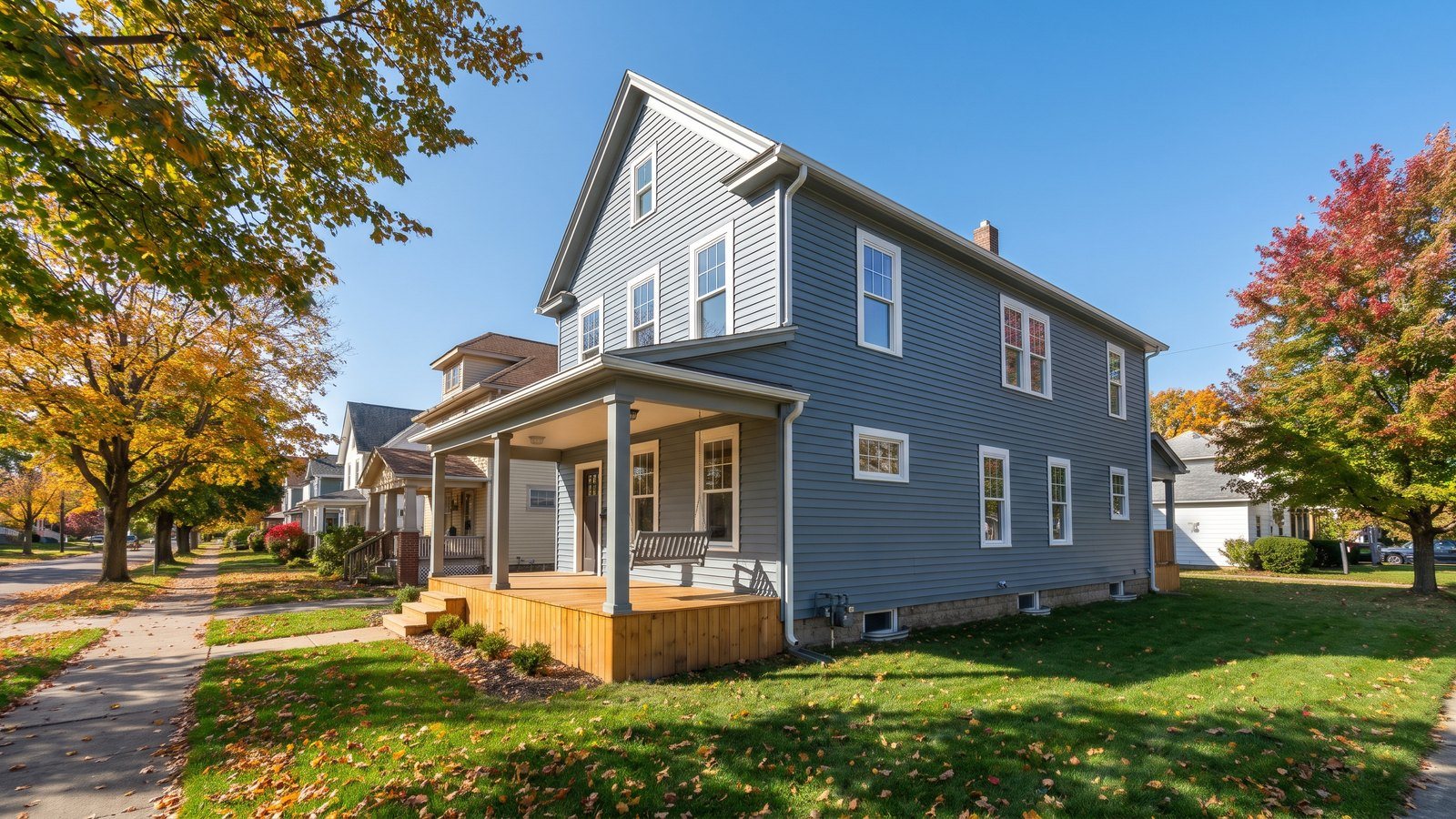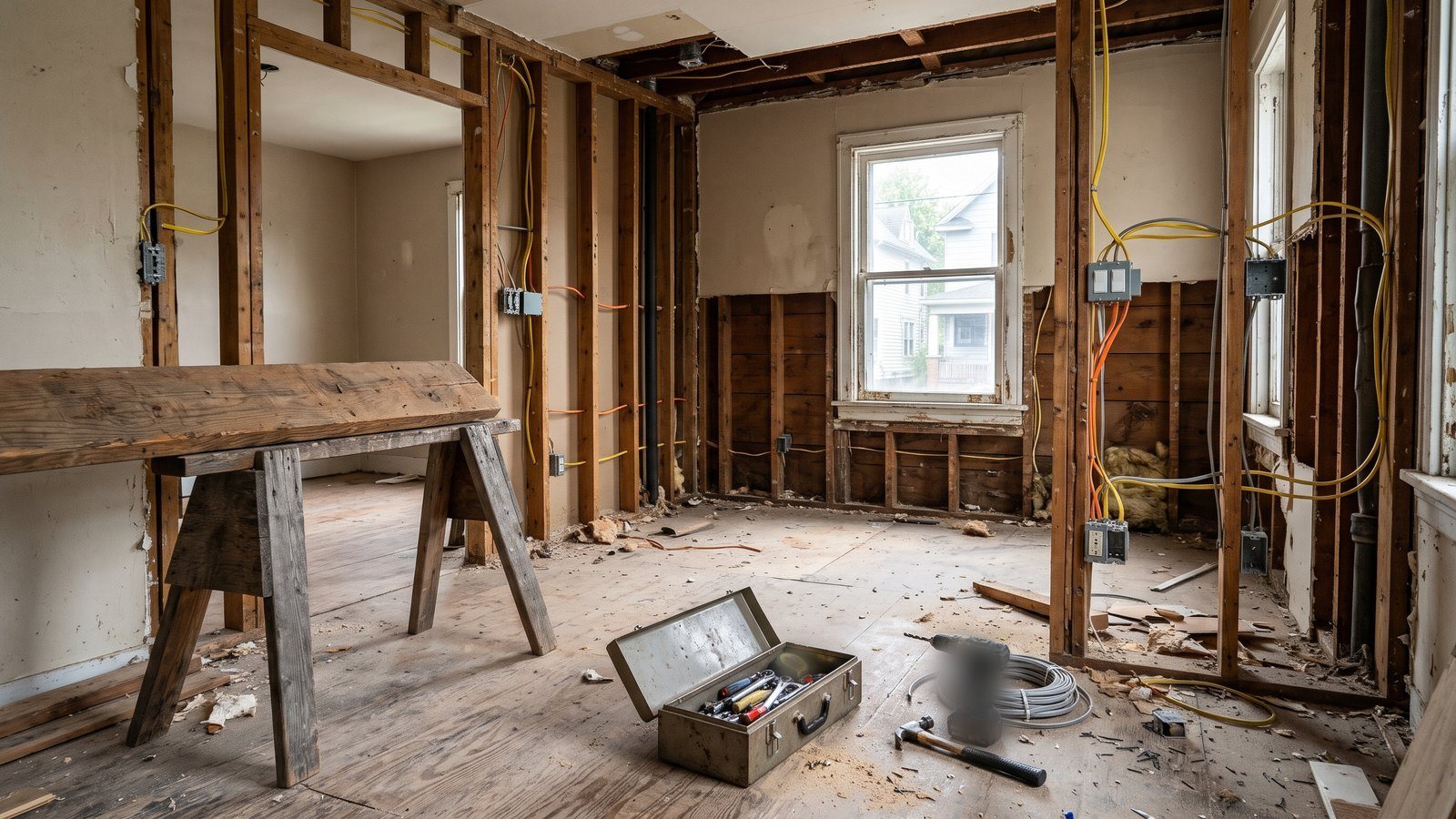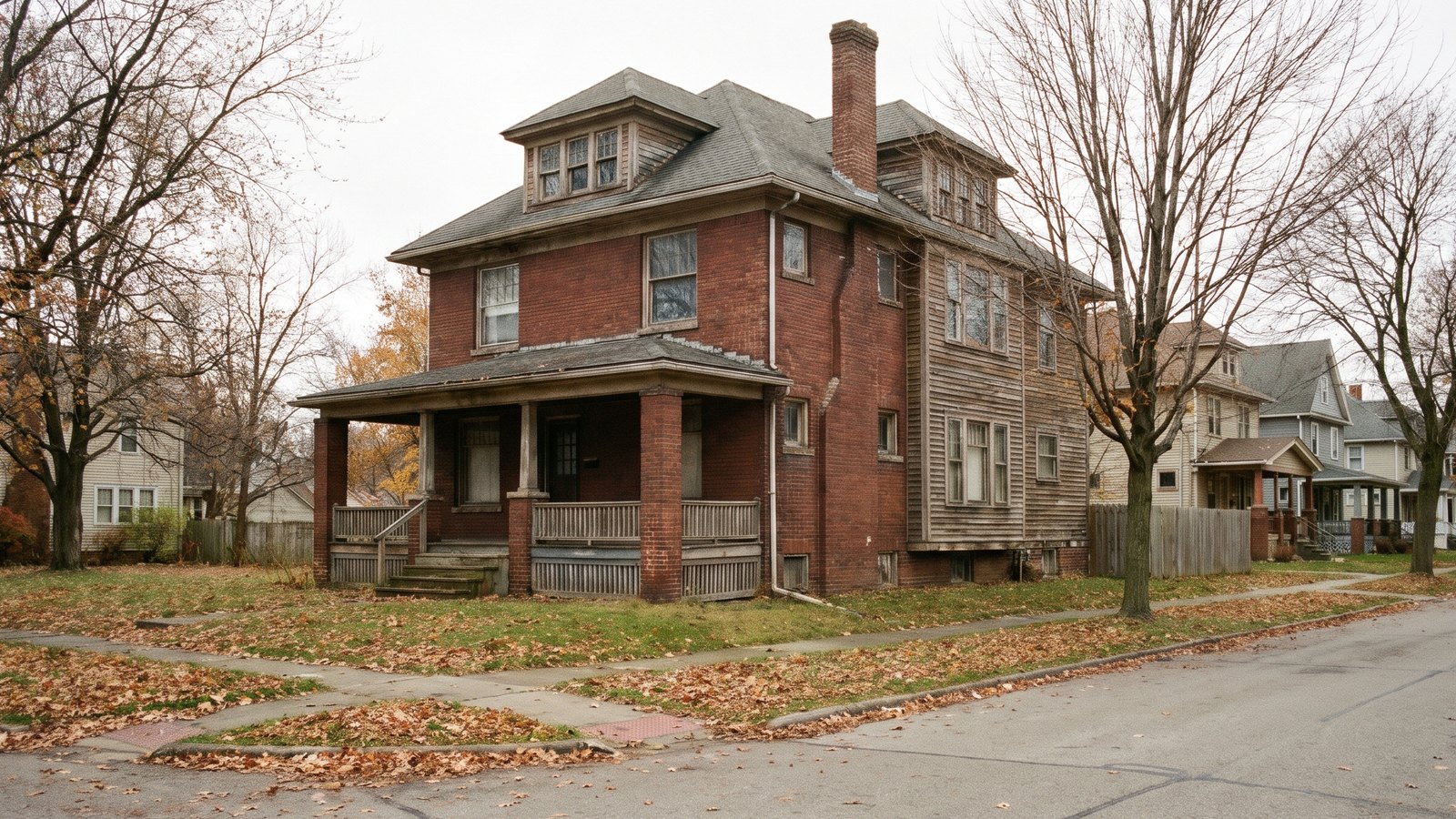
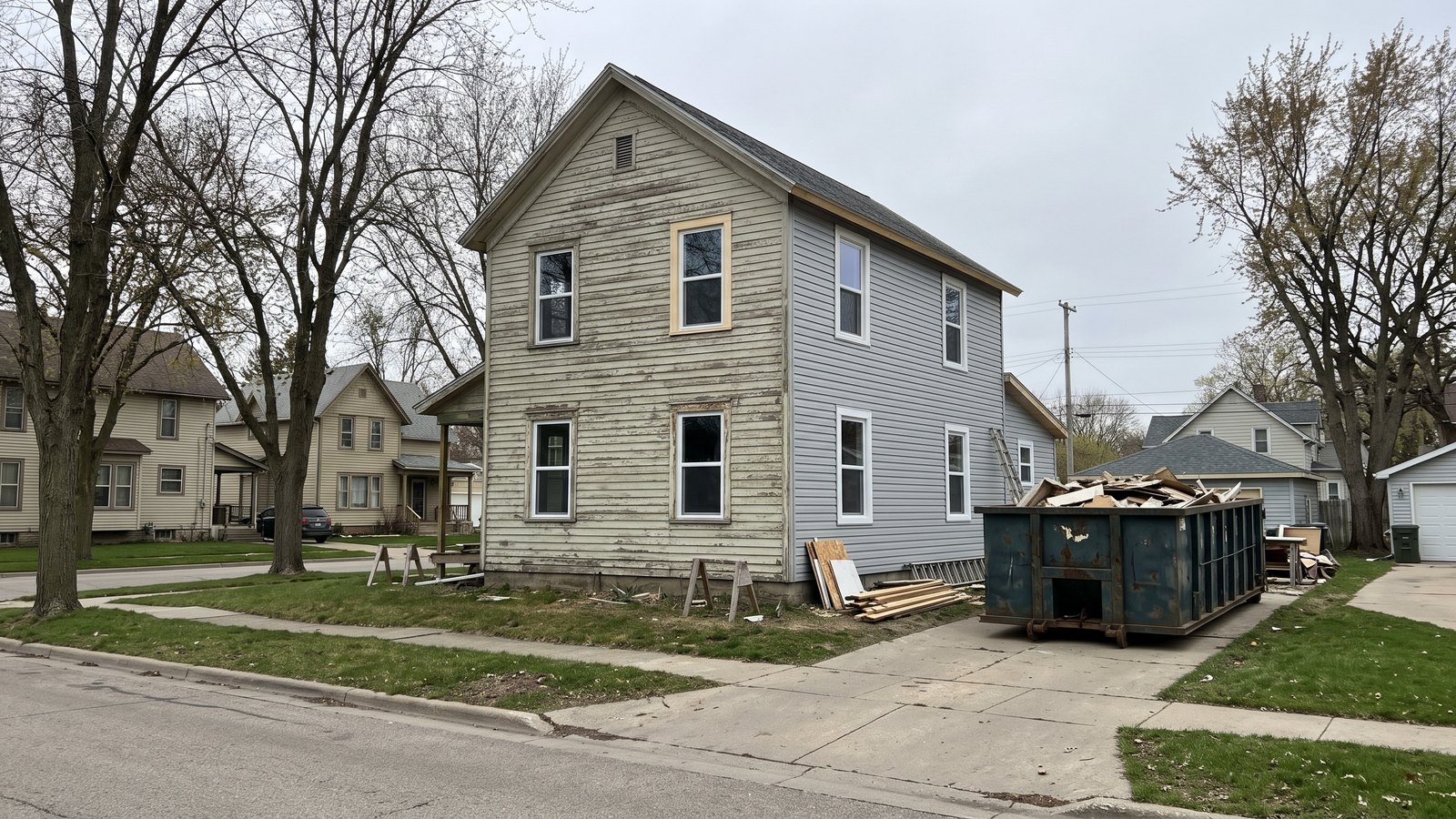
If you invest from a high-priced market, the numbers at home can be hard to make work: the Census puts the median home value at $921,200 in the City of Los Angeles, against $102,000 in the City of Cleveland (see our price comparison). In Cleveland, much of a house’s value is added during the rehab. That is the opportunity. The risk is the same everywhere: the repairs run over, the house sits longer, or it sells for less than you hoped.
This guide walks through every number in our free fix-and-flip calculator, so nothing is a black box. If you are buying to rent instead, see our rental property calculator guide.
What numbers do you need to analyze a flip?
The calculator asks for three property numbers and a set of assumptions. The assumptions come pre-filled from a template, and you can change any of them.
- Purchase price, Repairs and After-repair value (ARV). What you pay, what the rehab costs, and what the finished house should sell for.
- Closing costs %. Your costs to buy, as a percent of the price.
- Selling costs %. Your costs to sell, as a percent of the ARV.
- Hold (months) and Holding cost / mo. How long you own it, and what it costs each month to carry.
- Target profit. The least you want to make for the work and the risk.
- Financing. All cash, or hard money with Loan % of price, Rate % and Points.
How do you calculate profit on a fix-and-flip?
Start with the ARV and subtract every cost. Here is one illustrative house run through the calculator’s “Cash flip · conservative” template: 2.5% closing costs, 7% selling costs, a 6-month hold at $500 a month, and a $30,000 target profit. The house costs $70,000, needs $40,000 of repairs and has a $160,000 ARV. These numbers are illustrative only. They are not a listing, a comp or a forecast.
| Line | Amount |
|---|---|
| After-repair value (sale price) | $160,000 |
| Purchase price | − $70,000 |
| Repairs | − $40,000 |
| Closing costs (2.5% of price) | − $1,750 |
| Holding (6 months × $500) | − $3,000 |
| Selling costs (7% of ARV) | − $11,200 |
| Net profit | $34,050 |
Computed with the app’s own flip calculator. All cash, so no points or interest. Illustrative only.
That profit clears the template’s $30,000 target, so the calculator’s verdict reads “Meets your target”. Under the cards, a note spells out what is already included: $11,200 of selling costs, $0 of financing and $3,000 of holding, for a margin of 21.3% of ARV.
Run your own flip, free
Create a free account to use the free fix-and-flip calculator with your own price, repairs and ARV, and save every deal model to compare later.
What is the difference between ROI and annualized ROI on a flip?
ROI on cash is profit divided by the cash you put in. In the cash example that is $34,050 ÷ $114,750, or 29.7%. Annualized ROI scales that to a year: ROI × 12 ÷ hold months. A 29.7% return over 6 months annualizes to 59.4%. The calculator uses simple scaling, not compounding, so treat it as a way to compare deals of different lengths, not a promise of what a year will bring.
This is why time matters so much on a flip. The same profit earned in 4 months is a much better use of your money than the same profit earned in 12. Every extra month also adds holding costs and, with a loan, more interest.
How does hard money change the numbers?
Run the same house through the “Hard-money flip” template: a loan for 90% of the price at 11.5% plus 2 points, 2% closing costs, 6% selling costs, and a 5-month hold at $400 a month. In this calculator the loan covers part of the purchase price only, so you pay the repairs in cash, and interest is charged on the loan for the whole hold.
| Result | Cash → Hard money |
|---|---|
| Net profit | $34,050 → $32,721 |
| Financing cost (points + interest) | $0 → $4,279 |
| Cash needed | $114,750 → $54,679 |
| ROI on cash | 29.7% → 59.8% |
| Annualized ROI | 59.4% → 143.6% |
| Max offer @ target | $73,951 → $77,142 |
The two templates use different assumptions (closing, selling, hold and target), so this compares templates, not just financing. Computed with the app’s own calculator. Illustrative only.
Same house, $70,000 price, $40,000 repairs, $160,000 ARV. Computed with the app’s own flip calculator. Illustrative only.
Borrowing cuts the cash you need by more than half and roughly doubles the return on that cash, while profit falls by about $1,300 for points and interest. Stretch the hold to 9 months, though, and profit drops to $28,706 as interest and holding costs pile up. Leverage helps most when the timeline holds.
What is the 70% rule, and where does it break?
The 70% rule is a quick screen: the most you should pay is 70% of the ARV, minus repairs. For our house that is $160,000 × 0.70 − $40,000 = $72,000. It is fast, and it is useful for sorting a long list of houses. But it knows nothing about your closing costs, selling costs, hold time, financing or target profit.
That is why the calculator also shows Max offer @ target: the highest price at which this deal still hits your target profit after every cost in your template, including financing costs that grow with the price. In the cash example it is $73,951. With the hard-money template it is $77,142, because that template has a lower target and lower closing and selling costs. And when the ARV drops to $145,000, the 70% rule still says $61,500, while the max offer at a $30,000 target falls to $60,341. The rule of thumb would have you overpay.
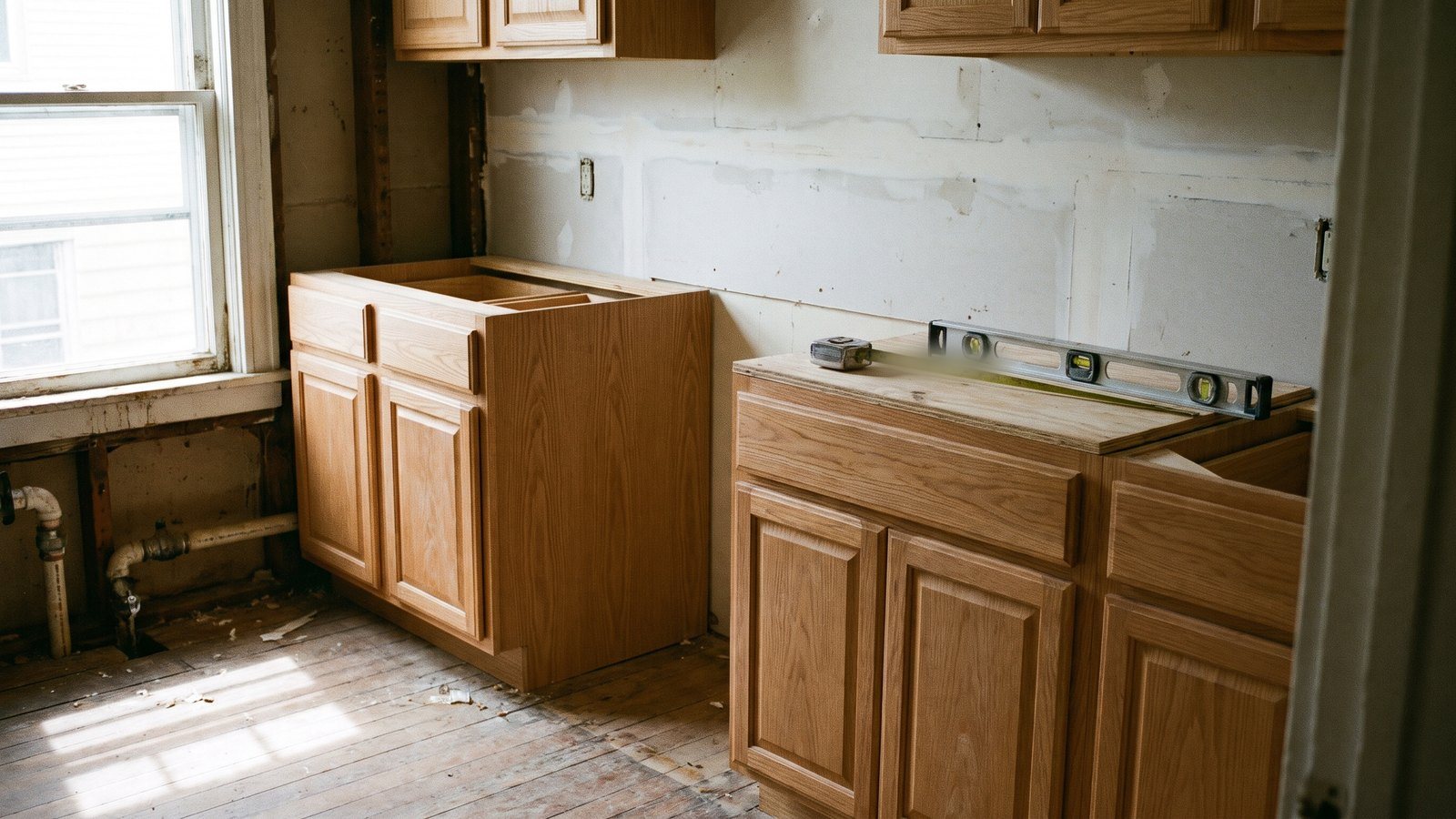
How do you decide whether a flip is worth doing?
The calculator gives one of three verdicts. Meets your target means profit is at or above your target. Thin — below target means it makes money, but less than you asked for. Loses money means the costs exceed the ARV. A thin deal is not always a pass. It is a signal to negotiate the price, tighten the scope, or shorten the timeline, then run it again.
A Greater Cleveland note
Put those into the right lines. Permits and lead-safe work belong in Repairs. The county conveyance fee is charged to the seller (the grantor) when the deed is recorded, so on the way out it belongs in Selling costs %. Our guide to the Cuyahoga County conveyance fee explains how it is figured.
Save the template that fits how you flip
Create a free account to set your own closing, selling, holding and financing assumptions, save them as a template, and run every house you look at on the same numbers.
How to run a flip in the free calculator, step by step
Pick a template
Start from “Cash flip · conservative” or “Hard-money flip”, or a template you saved.
Enter price, repairs and ARV
Use the asking price, a contractor’s written scope, and an ARV from recent sales of similar finished houses.
Adjust the assumptions
Set your closing and selling costs, hold time, monthly holding cost, target profit and loan terms.
Read the cards and the verdict
Check net profit, ROI, annualized ROI, cash needed, max offer @ target and the 70% rule MAO.
Stress-test it
Raise repairs, lower the ARV and add months. If it still works, you have a deal worth offering on.
The bottom line
Cleveland’s lower prices and older housing stock give a rehab investor room to add value that is hard to find in high-priced markets. The math decides whether a given house is that opportunity: ARV minus every cost to buy, fix, hold, finance and sell. Run it before you offer, use the max-offer number to negotiate, and stress-test the bad case.
Have your funding, your contractor and your numbers ready, because good flip candidates move quickly. Then let the calculator tell you which ones to chase.
Find your next flip
Create a free account to see off-market Greater Cleveland houses with asking prices and condition notes, run each one in the free flip calculator, and track your rehab spend in the free portfolio tracker.
Frequently asked questions
How do you calculate profit on a house flip?
Take the after-repair value and subtract the purchase price, repairs, closing costs, holding costs, financing costs (points and interest) and selling costs. In an illustrative all-cash example, a $160,000 ARV minus $125,950 of total costs leaves $34,050.
What is the 70% rule in house flipping?
It is a quick screen that says to pay no more than 70% of the ARV minus repairs. For a $160,000 ARV and $40,000 of repairs, that is $72,000. It ignores your actual closing, selling, holding and financing costs and your target profit, so check it against a full calculation.
What is a maximum allowable offer on a flip?
It is the highest price you can pay and still reach your target profit after every cost. Our free calculator shows it as “Max offer @ target” and accounts for costs that rise with the price, such as closing costs and loan points and interest.
How is annualized ROI calculated on a flip?
Our calculator multiplies the ROI on your cash by 12 and divides by the number of months you hold the house. A 29.7% ROI over 6 months annualizes to 59.4%. It is simple scaling, useful for comparing deals of different lengths.
Does a seller in Cleveland need a Certificate of Disclosure for a cash sale?
Yes. The City of Cleveland says the certificate must be processed before the property transfers, and that it is still required when a property is purchased in cash. The fee is $60 and it typically takes three to five days.
Do I have to give a disclosure form when I sell a flip in Ohio?
Ohio requires a person who intends to transfer residential real property by sale to complete the state property disclosure form and deliver it to the prospective buyer as soon as practicable, with some exemptions such as court-ordered and foreclosure transfers.
Sources
- Ohio Revised Code 5302.30 — Residential property disclosure form
- Ohio Revised Code 322.02 — Real property transfer tax (paid by the grantor)
- City of Cleveland — Certificates of Disclosure
- U.S. Census Bureau — ACS 5-year 2020–2024, B25077 median home value
- U.S. Census Bureau — ACS 5-year 2020–2024, B25035 median year structure built
This guide is general education, not legal, tax, lending or investment advice. Rules change and every deal is different: confirm with the official source, your attorney, CPA or lender before you rely on it. REI House Deals does not promise any return, profit or outcome on any property.