
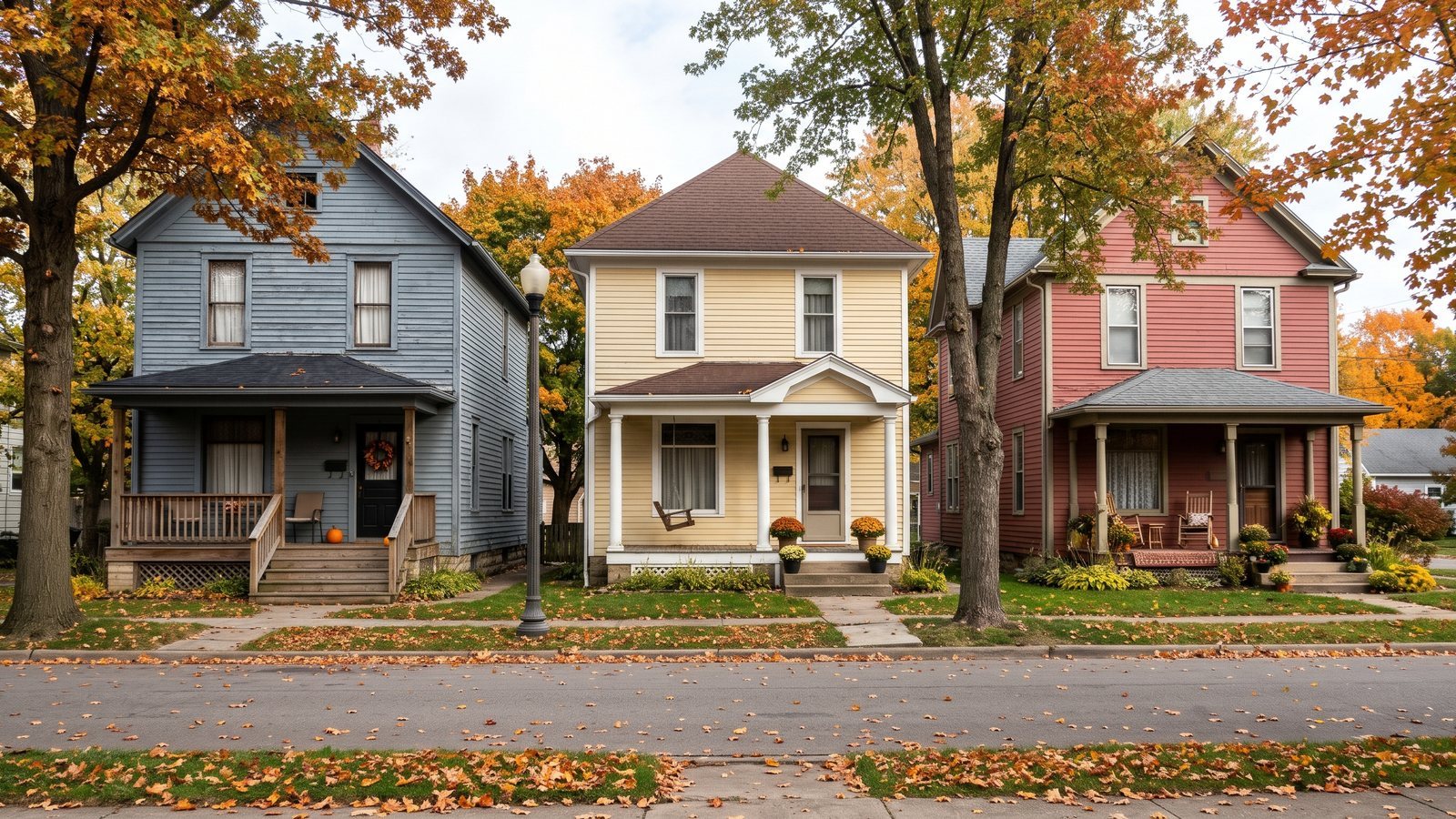
For an investor in a high-priced market, this can change the math. The Census puts the median owner-occupied home value at $921,200 in the City of Los Angeles and $102,000 in the City of Cleveland. Equity tied up in one house at home could, through an exchange, become several rental properties here (see our Cleveland price comparison). The rules are specific, though, and the deadlines do not move. This guide covers what the law and the IRS say, and how to plan around them.
What is a 1031 exchange?
A 1031 exchange, also called a like-kind exchange, is named for Section 1031 of the Internal Revenue Code. It says no gain or loss is recognized when real property held for productive use in a trade or business, or for investment, is exchanged solely for real property of like kind that will also be held for business or investment. The gain is not forgiven. Your basis carries over to the new property, so the tax is deferred, not erased.
Since the Tax Cuts and Jobs Act, Section 1031 applies only to real property. Property held primarily for sale, such as a house you buy to flip, does not qualify. A rental you have held as an investment can.
Can you 1031 exchange into property in another state?
Yes, within the United States. The IRS says real properties are generally of like kind, whether improved or unimproved. The only geographic line in the statute is that U.S. real property and real property outside the United States are not like kind. A rental in California, New York, Arizona or Florida can be exchanged for rental property in Ohio.
Line up Cleveland replacement properties early
Create a free account to browse off-market Greater Cleveland houses with asking prices and condition notes, and save a buy box for the price, bedrooms and property types you want.
What are the 45-day and 180-day deadlines?
Most exchanges are deferred: you sell first, then buy. The law sets two clocks that both start the day you transfer the property you are giving up.
| Deadline | What must happen |
|---|---|
| Day 45 | Identify the replacement property in writing, signed, and sent to the right party |
| Day 180, or your tax return due date if earlier | Receive the replacement property (close on it) |
Source: 26 U.S.C. 1031(a)(3) and the IRS Instructions for Form 8824. Both periods run from the date you transfer the property you give up. The return due date includes extensions.
The identification has to be specific. The IRS instructions say to describe real property by legal description, street address or a distinguishable name, in a document you sign and send to the person who will transfer the property to you or to another person involved in the exchange who is not a disqualified person. If the deadlines are missed, the exchange can fail and the gain may be taxable in the year you sold.
How many properties can you identify?
This is where Cleveland’s prices matter. Treasury regulations let you identify more than one replacement property, under one of two limits:
- The 3-property rule. Up to three properties, whatever they are worth.
- The 200-percent rule. Any number of properties, as long as their total fair market value at the end of the 45 days is no more than 200% of the value of what you sold.
Identify more than the rules allow and, with narrow exceptions, you are treated as if you identified nothing. Here is how the 200-percent rule can work. These numbers are illustrative only. They are not listings, comps or a forecast.
| Step | Amount |
|---|---|
| Property sold at home (fair market value) | $600,000 |
| 200% limit on identified properties | $1,200,000 |
| Identify eight Cleveland houses at $90,000 each | $720,000 total → within the limit |
| Close on the ones that pass inspection | Within 180 days |
Illustrative only. Whether and how much gain is deferred also depends on what you buy, the cash and debt on each side, and your own tax situation. Ask your CPA and intermediary.

What is a qualified intermediary, and why do you need one?
In a deferred exchange, you do not take the sale money yourself. The IRS instructions describe exchanges made through a qualified intermediary (QI): when the sale and the purchase run through a QI, the transfer and receipt are treated as a like-kind exchange. The instructions also say related parties and agents of the taxpayer cannot serve as the QI, and that if the timing requirements are missed because of the QI, the transaction won’t qualify. Choose your intermediary carefully and before you sign the sale contract.
What makes part of an exchange taxable?
If, as part of the exchange, you also receive money or other property that is not like kind, the IRS says you must recognize gain up to the amount of that money and property. You cannot recognize a loss. In plain terms: cash you take out of the exchange is generally taxable. Exchanges with related parties, such as family members or companies you are connected to, carry extra rules and reporting for two more years. Report every exchange on IRS Form 8824 with your tax return.
A Greater Cleveland note
Run every replacement property before Day 45
Create a free account to use the free rental and BRRRR calculators on each Cleveland property you are considering, and save the models so you can compare them side by side.
How do you plan a 1031 exchange into Cleveland?
Confirm the property qualifies
The property you sell must be held for investment or business use, not held primarily for sale. Ask your CPA.
Choose a qualified intermediary
Line one up before you sign the sale contract. The sale proceeds go to the intermediary, not to you.
Build your Cleveland short list
Set a buy box, review off-market deals, and run each one through a calculator with real repair numbers.
Line up your local team
A title company, a contractor for walk-throughs and a property manager, plus a Local Agent in Charge if you need one.
Identify in writing by Day 45
Use street addresses or legal descriptions, and stay within the 3-property or 200-percent rule.
Close by Day 180
Or by your tax return due date if that comes first. Then report the exchange on Form 8824.
The bottom line
A 1031 exchange can let an investor move equity from a high-priced market into Cleveland rentals without paying tax on the gain at the time of the exchange. Because Cleveland’s prices are a fraction of those in many coastal cities, one sale at home can be traded for more than one door here. The rules are strict and the clock is short, so the winning move is preparation: your CPA and intermediary chosen, your Cleveland properties short-listed, and your numbers run before you sell.
Start your Cleveland short list today
Create a free account to see off-market Greater Cleveland deals, run them through the free calculators, and track every property you add in the free portfolio tracker.
Frequently asked questions
What is a 1031 exchange?
A 1031 exchange, or like-kind exchange, lets you exchange real property held for investment or business use for other like-kind real property held the same way without recognizing gain at that time, under Section 1031 of the Internal Revenue Code. The gain is deferred, not erased.
Can I do a 1031 exchange from California into Ohio?
Real property in the United States is generally like kind to other U.S. real property, so an investment property in one state can be exchanged for investment property in another. Only U.S. and foreign real property are not like kind. Ask a CPA about your home state’s own rules.
What are the 45-day and 180-day rules in a 1031 exchange?
You must identify the replacement property in writing within 45 days after you transfer the property you are giving up, and receive it within 180 days after that transfer or by the due date of your tax return (with extensions), whichever is earlier.
How many properties can I identify in a 1031 exchange?
Treasury regulations allow up to three properties of any value, or any number of properties whose total fair market value is no more than 200% of the value of the property you sold.
Can a house I flip qualify for a 1031 exchange?
No. Section 1031 does not apply to real property held primarily for sale. It applies to real property held for productive use in a trade or business or for investment.
Is cash I take out of a 1031 exchange taxed?
Generally yes. The IRS says that if you also receive money or other property that is not like kind, you must recognize gain to the extent of that money and property.
Sources
- 26 U.S.C. 1031 — Exchange of real property held for productive use or investment (Cornell LII)
- 26 CFR 1.1031(k)-1 — Treatment of deferred exchanges (Cornell LII)
- IRS — Like-Kind Exchanges: Real Estate Tax Tips
- IRS — Instructions for Form 8824
- U.S. Census Bureau — ACS 5-year 2020–2024, B25077 median value
- City of Cleveland — Certificates of Disclosure
This guide is general education, not legal, tax, lending or investment advice. Rules change and every deal is different: confirm with the official source, your attorney, CPA or lender before you rely on it. REI House Deals does not promise any return, profit or outcome on any property.